

Elkind Reflects on Her Role as JAIR Editor-in-Chief
Professor Edith Elkind serves as one of three editors-in-chief for the Journal of Artificial Intelligence Research
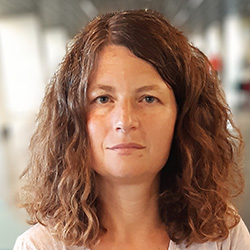 Since 2025, Northwestern Engineering’s Edith Elkind has served as one of three editors-in-chief for the Journal of Artificial Intelligence Research (JAIR). Along with J. Christopher Beck and Mykel Kochenderfer, Elkind leads the open access, peer-reviewed journal, which focuses on “the rapid dissemination of important research results to the global artificial intelligence community,” according to JAIR’s website.
The journal’s scope encompasses all areas of AI, including agents and multi-agent systems, automated reasoning, constraint processing and search, knowledge representation, machine learning, natural language, planning and scheduling, robotics and vision, and uncertainty in AI.
Ken Forbus, Walter P. Murphy Professor of Computer Science, said JAIR was established with a commitment to high quality and quick turnaround times to better serve the fast-moving field of AI.
 Forbus, who was elected as a Fellow of the Association for the Advancement of Artificial Intelligence in 1992, emphasized that the scientific journal also pioneered the model of treating electronic publication as the primary and official version of record.
As editor-in-chief, Elkind handles between five and seven paper submissions per week, deciding whether to desk-reject them or refer them to one of the journal's associate editors.
The role also involves recruiting associate editors, resolving disputes, managing a best paper award committee, and responding to author inquiries—averaging around five hours a week in addition to her regular teaching and research responsibilities.
JAIR recently expanded to three editors-in-chief to manage a growing volume of submissions, with each serving staggered four-year terms. Elkind, who has three years remaining in her term, notes that the sheer breadth of what lands in her inbox has been one of the more eye-opening aspects of the role.
“It's amazing how broad the field of AI is,” said Elkind, the Ginni Rometty Professor of Computer Science at the McCormick School of Engineering, “What people think of as AI is even broader than what the community sometimes thinks about it.”
Recent submissions have included papers consisting largely of transcripts of conversations with large language models as evidence of machine consciousness.
Elkind highlighted a section of the journal that readers might not expect: one dedicated to the societal impact of AI. Although most of the submissions are technical papers exploring architectures and proving theorems, there’s a special section for examining issues such as how AI might transform certain industries.
“Those are not technical, but they are still scientific papers,” Elkind said. “They’re not just people trying to imagine what may happen, but they support their reasoning with data.”
 Samir Khuller, the Peter and Adrienne Barris Chair of Computer Science, noted that it’s a great honor for Elkind to have been selected for this important role in the community.
“Just at a time when we are launching our undergraduate major in AI, it’s important for people to understand that the field of AI is a lot broader than machine learning that has dominated the news cycle,” Khuller said. “Research in natural language processing, robotics and vision are in the news due to dramatic recent advances, but all this builds on decades of work on knowledge graphs, game theory, agents, expert systems, reasoning, logic, speech recognition, clustering, supervised learning, and reinforcement learning—to name just a few areas in which we offer courses.”