

News & EventsDepartment Events
Events
-
Feb7
EVENT DETAILS
less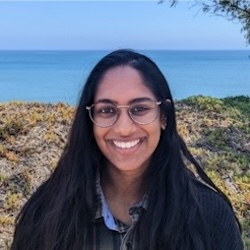
The Neuromechanical Basis of Human Touch: Insights from Data-Driven Simulation
Neeli Tummala
Postdoctoral Candidate, Electrical and Computer Engineering, University of California, Santa BarbaraDate: Wednesday, February 7 • 10:00 AM
Location: Tech B211 (ME Conference Room)
Zoom: https://tinyurl.com/CRBSeminarAbstract: The sense of touch is a complex neuromechanical system that is essential for everyday tasks, like holding a pencil or picking up a glass of water. When we touch an object with our hands, the contact event generates skin oscillations that are biomechanically transmitted throughout the entire upper limb, exciting thousands of widespread touch receptors that convey information about the touch interaction to the brain. This neuromechanical process is challenging to fully characterize due to the biomechanical complexity of the hand and the limitations of current neural recording techniques. In this talk, I will present a data-driven method for simulating biomechanical transmission and touch receptor population responses across the entire hand with high spatiotemporal resolution. With this technique, I will establish that biomechanical transmission plays a central pre-neuronal role in the human tactile system by disseminating diverse touch information across touch receptor populations, thereby supporting tactile encoding efficiency. I will also discuss how these touch receptor population responses spatially encode information about complex, natural touch gestures, such as tapping and grasping. Finally, I will detail an open-source software I developed to support haptics researchers in investigating these complex biomechanical processes that underlie our sense of touch. Ultimately, my work holds promise for expanding our understanding of human touch perception and introduces principles that could be leveraged for artificial tactile sensing in robotics and prosthetics and for the design of haptic devices.
Bio: An electrical and computer engineering (ECE) PhD student at UC Santa Barbara, Neeli Tummala studies how a person’s tactile system, or sense of touch, encodes information from the environment, and she uses that knowledge to create better haptic devices, robots, and prosthetics, as well as to develop tools and techniques that aid people with sensory disorders.
TIME Wednesday, February 7, 2024 at 10:00 AM - 11:00 AM
LOCATION ME B211, Technological Institute map it
CONTACT Amy Nedoss amy.nedoss@northwestern.edu EMAIL
CALENDAR Center for Robotics and Biosystems (CRB)
-
Jan5
EVENT DETAILS
lessWinter classes begin
TIME Monday, January 5, 2026
CONTACT Office of the Registrar nu-registrar@northwestern.edu EMAIL
CALENDAR University Academic Calendar
-
Jan12
EVENT DETAILS
lessAbstract:
For three centuries, Western thought lived under Newton’s clockwork paradigm—a
worldview of predictability, control, and linear causation. It shaped institutions from
Madison’s checks and balances to Taylor’s scientific management, defining modernity.
But successive scientific revolutions—statistical thermodynamics, relativity, quantum
mechanics, evolution, game theory, DNA, and AI—revealed a radically different
universe: dynamic, probabilistic, and deeply complex. We have shifted from Newton’s
clocks to what Popper called a “cloud world,” marked by emergence, interdependence,
and irreducible uncertainty.This talk traces how these revolutions reshaped our understanding of reality and
explores their leadership implications: why navigating 21st-century challenges demands
embracing complexity, cultivating resilience, and designing organizations that work with,
rather than against, dynamic systems.Bio:
Julio Mario Ottino is a researcher, engineering scientist, academic leader, educator, artist, and author. He is Founder and Co-Director of the Northwestern Institute on Complex Systems, McCormick Institute Professor of Engineering, W.P. Murphy Professor of Chemical Engineering, with a courtesy appointment in Mechanical Engineering at the McCormick School of Engineering, and Professor of Management and Organizations at Northwestern at the Kellogg School of Management in Northwestern University. Widely recognized as a world authority on mixing, chaos, and complexity, he has been a Guggenheim Fellow and is a member of the National Academy of Engineering, the National Academy of Sciences, and the American Academy of Arts and Sciences. As Dean of Engineering, he launched major university-wide initiatives, programs, degrees, and centers spanning design, energy and sustainability, synthetic biology, human–computer interaction, and entrepreneurship. His most recent book, The Nexus (MIT Press, 2022) was a category winner in Engineering and Technology, from the Association of American Publishers
TIME Monday, January 12, 2026 at 3:00 PM - 4:00 PM
LOCATION LR3, Technological Institute map it
CONTACT Jeremy Wells jeremywells@northwestern.edu EMAIL
CALENDAR McCormick - Mechanical Engineering (ME)
-
Feb2
EVENT DETAILS
lessAbstract:
We provide an overview of a recent NASA University Leadership Initiative project entitled “Development of an Ecosystem for Qualification of Additive Manufacturing Processes and Materials in Aviation”. This work demonstrated the dependence of fatigue on defect structures in AM Ti-6Al-4V. Our current NASA Science & Technology Research Institute “Institute for Model-Based Qualification & Certification of Additive Manufacturing (IMQCAM)” is creating a numerical digital twin (DT) for predicting fatigue as a function of process parameters. The key result of a systematic variation across power-velocity space was that the defect number density was anti-correlated with fatigue life. The fatigue-based process window was much narrower compared to typical reports and explainable in terms of observed variations based on spatter rates and intermittent lack of melt pool overlap. We report on recent developments in modeling microstructure, texture and pores along with variations in heat treatment. We conclude that establishing a qualified materials process is feasible via an efficient survey of a limited domain of process space. Linking models together in the DT requires substantial effort in terms of data exchange. In terms of predictability of fatigue, the limited data suggests that the scatter in life is smallest in the long crack (Paris Law) regime, intermediate for short cracks and largest for crack nucleation. This provides an important background for Uncertainty Quantification (UQ), which is a major focus for the IMQCAM team and which has already revealed a significant sensitivity to compositional variations, for example.
Support from multiple agencies is gratefully acknowledged, including NASA, DOE/BES, DOE/NNSA, ONR, NSF, OEA, Commonwealth of Pennsylvania, and Ametek. I am indebted to my many collaborators.
Bio:
I have been a member of the faculty at Carnegie Mellon University since 1995. I am also the Co-Director of the NextManufacturing Center on additive manufacturing. Previously, I worked for the University of California at the Los Alamos National Laboratory. I spent nine years in management with four years as a Group Leader (and then Deputy Division Director) at Los Alamos, followed by five years as Department Head at CMU (up to 2000). I have been a Fellow of ASM since 1996, Fellow of the Institute of Physics (UK) since 2004 and Fellow of TMS since 2011. I received the Cyril Stanley Smith Award from TMS in 2014, was elected as Member of Honor by the French Metallurgical Society in 2015 and then became the US Steel Professor of Metallurgical Engineering and Materials Science in 2017. I received Cyril Stanley Smith Award from the International Conference on Recrystallization and Grain Growth in 2019 and the Hans Bunge Award from the Intl. Conf. on Textures of Materials (ICOTOM) in 2024. I was an International Francqui Professor (Belgium) in 2022 and I received the ASM Gold Medal and was promoted to University Professor, both in 2024. My research focuses on processing-microstructure-properties relationships with interests in additive manufacturing, the measurement and prediction of microstructural evolution, the relationship between microstructure and properties, especially three-dimensional effects, texture & anisotropy and the use of synchrotron x-rays.
TIME Monday, February 2, 2026 at 3:00 PM - 4:00 PM
LOCATION LR3, Technological Institute map it
CONTACT Jeremy Wells jeremywells@northwestern.edu EMAIL
CALENDAR McCormick - Mechanical Engineering (ME)