

Research / Areas of ResearchBiotechnology and Synthetic Biology
The world faces a range of global challenges where biotechnologies stand to offer impactful solutions. Synthetic biology is reframing how we approach biotechnology development by uncovering new engineering principles by which we may harness the power of natural organisms to solve these challenges. New drug and new drug delivery technologies will help us fight disease, smart therapeutics promise whole new approaches to treating a range of diseases, cell-free diagnostic approaches promise to diagnose diseases and environmental contaminants, and new biomanufacturing technologies will help us sustainably supply the world with countless products. Northwestern chemical and biological engineers - trained and grounded in quantitative physical, biological and computational sciences - will make discoveries and innovate new approaches and drive the field forward.
Research Areas
Specific research areas pursued in the department include:
- Mammalian synthetic biology
- RNA synthetic biology
- Cell-free synthetic biology
- Point-of-use diagnostics
- Metabolic engineering
- Experimental and Computational Systems biology
- Protein Engineering
- Biomaterials
The department also has strong theoretical and computational research on bio-interfaces, computational and systems biology, self-organization and emergent behavior in biological, chemical and physical systems, and medical informatics.
Faculty

Linda Broadbelt
Sarah Rebecca Roland Professor
Professor of Chemical and Biological Engineering
Senior Associate Dean
The Broadbelt Lab, in collaboration with the Tyo Lab, is developing computational frameworks to guide and optimize metabolic network design to achieve production of desirable compounds in biological systems.

Ashty Karim
Assistant Professor of Chemical and Biological Engineering
The Karim Lab develops molecules, systems, and processes to enable global sustainability.

Ella King
Assistant Professor of Chemical and Biological Engineering (beginning on September 1, 2026)
Assistant Professor of Materials Science and Engineering (beginning on September 1, 2026)
Sam Kriegman
Assistant Professor of Computer Science
Assistant Professor of Mechanical Engineering
Assistant Professor of Chemical and Biological Engineering

Josh Leonard
Professor of Chemical and Biological Engineering
The Leonard Lab is enabling an emerging paradigm of design-driven medicine by integrating synthetic biology with systems biology to address pressing challenges in medicine and biotechnology.
Julius Lucks
Margery Claire Carlson Professor of Chemical and Biological Engineering
The Lucks Lab develops methods for high-throughput dynamic RNA structural biology, and investigates molecular design and evolution approaches for RNA synthetic biology and cell-free point-of-use diagnostic technologies.

Arthur Prindle
Associate Professor of Chemical and Biological Engineering and (by courtesy) Biomedical Engineering
Associate Professor of Biochemistry and Molecular Genetics
The Prindle Lab develops enabling technologies to characterize microbial communities and to engineer these microbes with the capacity to monitor and improve human health.

Krishna Shrinivas
Assistant Professor of Chemical and Biological Engineering and (by courtesy) Engineering Sciences and Applied Mathematics and Cell and Developmental Biology
Danielle Tullman-Ercek
James N. and Nancy J. Farley Professor in Manufacturing and Entrepreneurship
Professor of Chemical and Biological Engineering
Director, Master of Science in Biotechnology Program
The Tullman-Ercek lab engineers nanoscale protein machines and assemblies to create novel materials, biochemicals, vaccines, and diagnostics.
Keith Tyo
Associate Professor of Chemical and Biological Engineering
The Tyo Lab is understanding and engineering how molecules interact with proteins to enable new enzymatic reactions and biosensing modalities.

Lisa Volpatti
Assistant Professor of Biomedical Engineering
Assistant Professor of Chemical and Biological Engineering

Muzhou Wang
Associate Professor of Chemical and Biological Engineering
The Wang lab engineers new tools to characterize the nanostructure and mechanical properties of biomaterials at high resolution and high throughput.
Courtesy
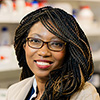
Ludmilla Aristilde
Professor of Civil and Environmental Engineering
Professor of Chemical and Biological Engineering (by courtesy)
Professor of Earth and Planetary Sciences (by courtesy)
The Aristilde Lab seeks to elucidate metabolic pathway networks in complex nutrient conditions using metabolomics-enabled systems biology approaches.
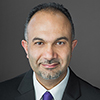
Omar Farha
Charles E. and Emma H. Morrison Professorship in Chemistry and (by courtesy) Chemical and Biological Engineering
The Farha lab investigates the immobilization of enzymes and other biomolecules in biocompatible carriers for their long-term stability and controlled activity in biocatalysis and drug delivery.

Chad Mirkin
George B. Rathmann Professor of Chemistry, Materials Science and Engineering, and (by courtesy) Chemical and Biological Engineering and Biomedical Engineering
Director, International Institute for Nanotechnology
The Mirkin lab uses spherical nucleic acids for the monitoring and manipulation of biological processes at the single-cell, tissue, and whole organism level.

Milan Mrksich
Henry Wade Rogers Professor of Biomedical Engineering
Professor of Chemistry
Professor of Cell and Developmental Biology
The Mrksich lab uses the tools of organic chemistry, materials science and biochemistry to address important challenges in and at the intersection of chemistry and biology.