

Hidden Treasure
Securing minerals to power society


What do data centers, cars, agriculture, and smart devices have in common? They all rely on minerals.
From copper to graphite to zinc, most minerals are mined directly from the earth, where reserves are available around the world. However, some minerals are abundant in surprising places such as lakes and waste streams, where they have yet to be harvested on a large scale. Northwestern engineers are unearthing new approaches, technologies, and tools to expand the availability of minerals for the future.
“Ultimately, we need raw minerals from which we’re going to synthesize novel materials for next-generation technologies,” explains Mark Hersam, chair and Walter P. Murphy Professor of Materials Science and Engineering. “The raw minerals are often mined, which creates supply chain challenges depending upon where the mines are located.” In most cases, those mines are located overseas, which creates a dependence for the United States.
Mining comes with other challenges. Data has shown that confusion and concern around human health impacts can fuel community opposition and slow the development of new mines.
Ultimately, we need raw minerals from which we’re going to synthesize novel materials for next-generation technologies. The raw minerals are often mined, which creates supply chain challenges depending upon where the mines are located. Chair and Walter P. Murphy Professor of Materials Science and Engineering
Jennifer Dunn, professor of chemical and biological engineering, notes that as the United States builds its domestic mineral supply chain, “a role of the University is to help assess, develop, and scale technologies that can expand domestic mining to meet our needs while limiting the types of emissions to water or air that would harm people’s health in the vicinity of mines.” This role requires collaboration across disciplines and geographies.
Minerals at the core of everyday technology
When it comes to harvesting graphite and the innovative materials derived from it, Hersam is writing the playbook. This critical mineral has been a focal area of his research at Northwestern for the past 20 years, and recent collaborative advancements are elevating the game.
Graphite has long been essential to the anode side of the lithium-ion batteries that power everyday technology. Thanks to Hersam’s research, a coating of graphene—a high-performance electronic material derived from graphite—can now be part of the cathode side of those batteries as well.
“Graphene has superlative electronic conductivity and is very inert chemically,” Hersam explains. In a caustic environment, such as a lithium-ion battery, the atomically thin carbon material facilitates both chemical stability and electrical connectivity. Plus, it improves charging speed and prolongs battery life.

The demand for graphene is skyrocketing. It’s used in lithium-ion battery applications from backup power for data centers to grid-level energy storage to printed electronics including medical monitoring patches and environmental sensors. Ongoing work focuses on upcycling sustainably sourced graphene to print sensors that could then be used to monitor mining waste for residual valuable minerals and to reduce waste.
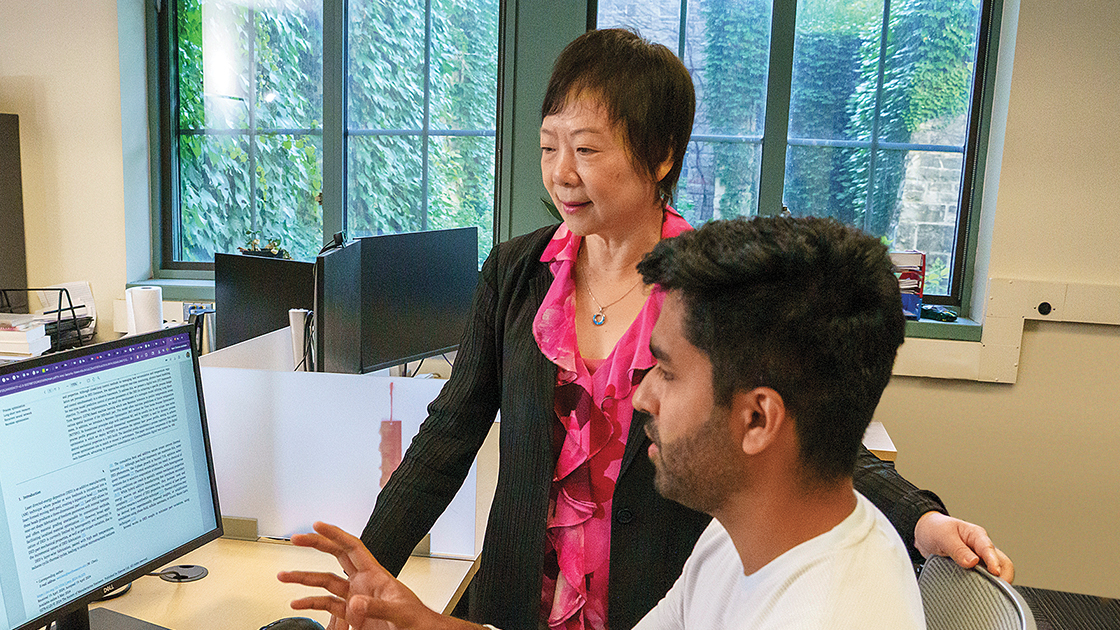
Hersam, Dunn, and Wei Chen, Wilson-Cook Professor in Engineering Design and chair of mechanical engineering, are working together to produce larger quantities of graphene from graphite. Chen leverages AI-based methods to identify the ideal processing conditions for graphene production to optimize yield, sustainability, and cost. Her approach of adaptive learning identifies the preferred technique much more quickly than conventional trial-and-error methods.
“After we do a very small amount of physical tests, we can find optimal processing conditions considering multiple criteria,” Chen says.
Bringing mining data to the surface
The challenge of acquiring minerals is massive in every sense—a concept all too clear to Dunn when she visited the world’s largest copper mine in Chile. It took an hour to drive from the main entrance of the mine to the heart of the operation—an underground world of ore.
Dunn is uniquely positioned to see the big picture. She is an expert in quantifying environmental impacts from mining that include water consumption and water pollution.
In two recent papers, Dunn and her team set the stage for more consistency in quantifying mining’s environmental impacts. After a comprehensive review of 15 years of studies on these impacts, they found inconsistencies that made comparing results difficult.
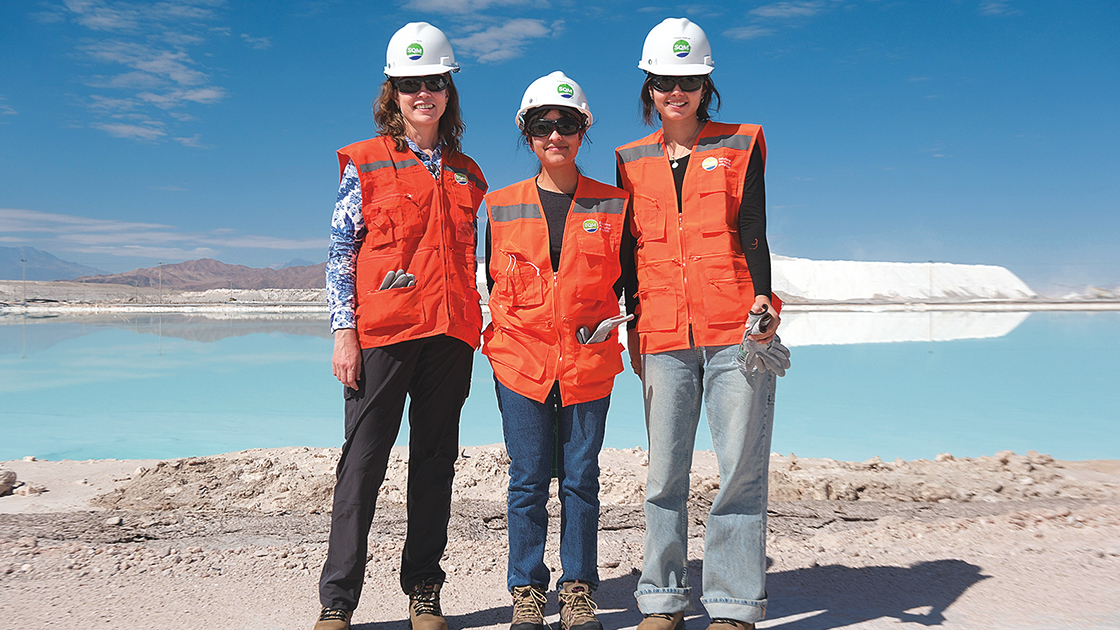
“We realized that there is an important need for better methods and data so that it’s possible to compare the environmental effects of different supply chains for these minerals,” Dunn says. In response, her team published guidelines researchers can follow as they evaluate mining’s environmental effects. Future studies that follow the guidelines can be more accurately compared across geographies, minerals, and other conditions. Such comparable analyses would also improve understanding of how a shifting supply chain, including the possible development of new mines or changes to existing mines, will influence sustainability and impacts.
In their second paper, Dunn’s team members unpacked the global state of data on mine emissions to air, water, and land. These factors determine the emissions of pollutants like nitrates, metals, and particulate matter per metric ton of mineral produced.

The initial challenge? Wrangling data from disconnected sources. Dunn’s team consolidated decentralized data for copper and nickel mines in the United States into a data compendium that experts can tap into for future analyses. Dunn and her colleagues are already working on expanding that resource to include mines in Chile, Australia, and Canada.
Collaborations with members of the US National Science Foundation-funded center for a Sustainable, Resilient, and responsible global Minerals supply chain (SuReMin) that Dunn leads support impactful international research in mining sustainability, including developing the data compendium. Beyond research, SuReMin provides important educational opportunities for students. For example, SuReMin has held seminars with industrial speakers for engineering students at Northwestern and for global SuReMin partners to learn about sustainability initiatives and employment opportunities in the mining industry. SuReMin has also supported Northwestern’s Global Engineering Treks for students to learn about mining. In addition, Ally Snead, a graduate student in Dunn’s research group, is a Fulbright Scholar with a SuReMin partner in Australia, the Sustainable Minerals Institute at the University of Queensland.

Engineering Technologies to Recover Valuable Minerals
As the need for minerals, which are nonrenewable resources, continues to grow amid production shortages, exploring all options for acquiring them becomes imperative.
“ A lot of people would prefer that we don’t open new mines or expand mining to meet the critical mineral demand,” Dunn says. “But the demand is so large that expanding mining is unavoidable. So, we need parallel paths.”
Those parallel paths include extracting minerals from natural sources other than mines and upcycling previously used minerals. Those techniques can boost local supply, in addition to or instead of mining.
Extracting minerals from natural sources
Some minerals abound naturally in sources other than mines. In Chilean salt lakes and other salt brines, for example, magnesium and lithium can be found together. Because the lithium must meet high purity standards for industrial use, it must be separated from the magnesium before it can be used.
Northwestern Engineering’s Richard Lueptow and his collaborators accomplished this by adding a coating to a nanofiltration membrane that becomes positively charged at an acidic pH, allowing lithium ions to pass through but blocking most magnesium ions. Introducing a positive charge to the membrane is a key innovation that enables the selective separation of lithium and magnesium.
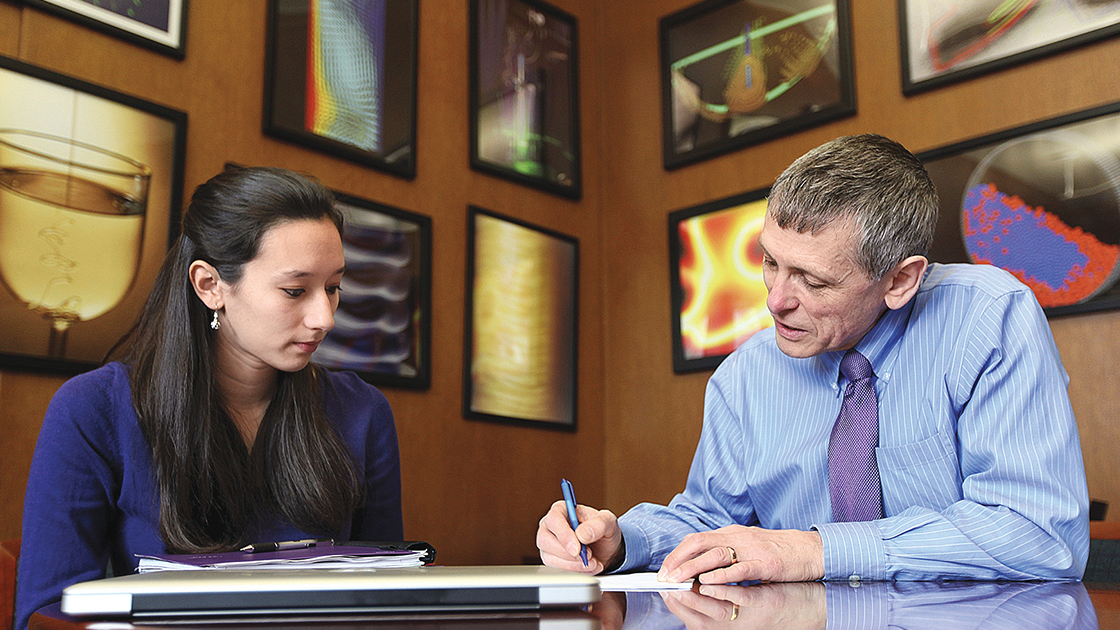
Starting small is key, says Lueptow, senior associate dean and professor of mechanical engineering. His team performs atom-by-atom simulations called molecular dynamics to explore how ions interact with the charged membrane nanostructure.
“We can look inside one of the membranes that could be used for separating lithium ions from magnesium ions and see the interactions at the molecular level computationally,” Lueptow says.
Collecting minerals from polluted water
A century of industrial progress has left a treasure trove of discarded minerals in the world’s waterways.
Phosphate has long been found streaming into waterways from agricultural lands as runoff from fertilizer. Copper and zinc have accumulated in the Great Lakes since the Industrial Revolution. The value of these once-discarded minerals is now recognized. Copper is vital to data centers, zinc is key to industrial manufacturing, and phosphate remains important for food production.
“The mine of the future may well be waste streams,” says Vinayak Dravid, Abraham Harris Professor of Materials Science and Engineering. His lab is developing technologies to recover minerals from polluted urban and agricultural water. Over the past several years, Dravid and his collaborators have developed a family of sponge-based materials designed to selectively capture and recover valuable minerals from contaminated water. Dravid’s Phosphate Elimination and Recovery Lightweight (PEARL) membrane provides a simple single-step capture and recovery process for phosphate.
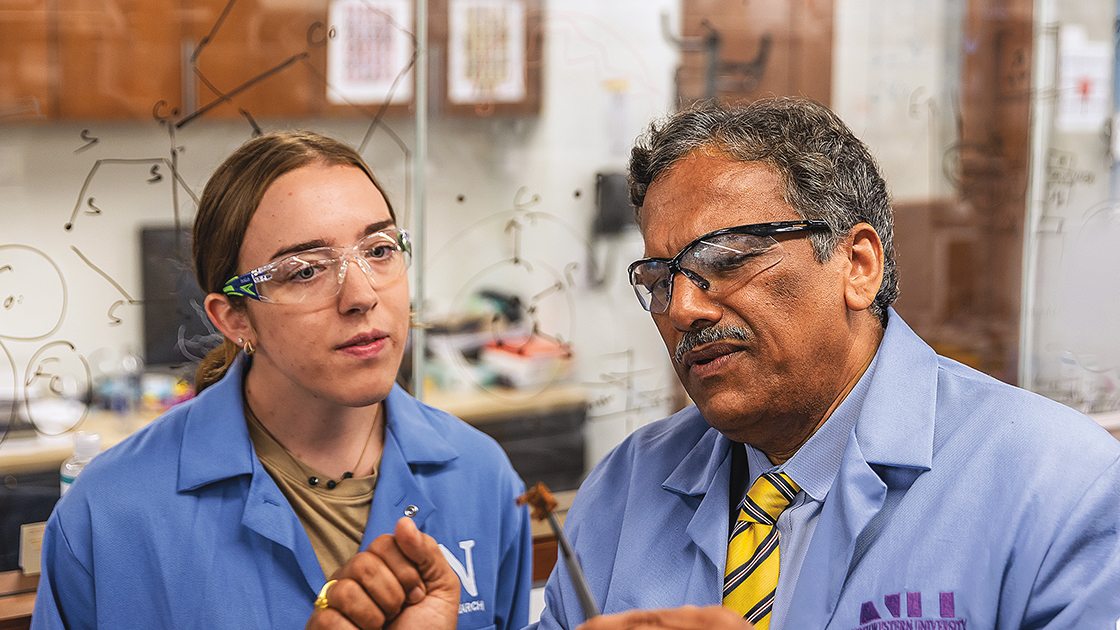
Another of Dravid’s technologies, a magnetically recoverable sponge coated with functional nanoparticles, can collect zinc, copper, phosphate, and other valuable ions present at very dilute concentrations from what he calls “used” water, then later release them one by one when prompted. “It’s no longer purely about environmental sustainability, which is a natural outcome from this process,” Dravid says. “If you use a mineral and recover it for reuse, you effectively multiply the value of that mineral many times over.”
Finding value in industrial waste
There is broad recognition that recovering critical and rare metals is essential to creating a resilient manufacturing sector for key technologies. Identifying waste streams that contain these metals and recovering them from those waste streams is the key step to ensuring a robust domestic supply of those elements to power these technologies. Associate Professor of Chemical and Biological Engineering
Industrial waste is another promising source of minerals. Jeffrey Richards, associate professor of chemical and biological engineering, is working to recover copper and zinc from semiconductor manufacturing waste.
“The opportunity is to use electrochemistry to directly recover these metal ions as a solid that can be easily separated from the acidic waste stream,” he says. “These metallic solids can then be resold or reused.”
Corporate partnerships are particularly valuable to this work. They offer researchers insight into real marketplace needs, enable immediate application of their findings, and show graduate students the direct impact of their research. “We always try to sit at the interface between fundamental research and the actual application to make sure that the fundamental research we’re doing is relevant,” Richards says.
The biofuels industry has also proven to be an abundant source of a useful waste product: carbon-rich biochar. Hersam recently published a technique for sourcing graphite from biochar. This graphite, referred to as biographite, can then be transformed into graphene.
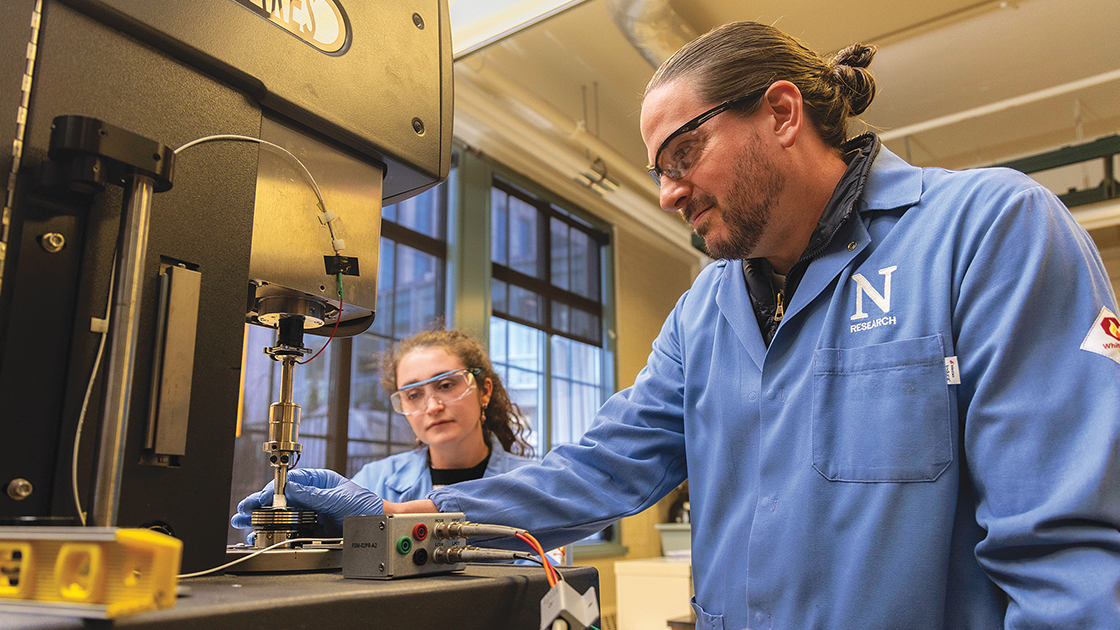
Bio-derived graphene can be made into graphene inks for high-value applications like batteries, IoT devices, and printed electronics. “Suggesting that a high-performance electronic material like graphene could be produced completely from waste biochar seemed outrageous at first—but I am happy to report that we’ve shown that it is possible,” Hersam says.
“There is broad recognition that recovering critical and rare metals is essential to creating a resilient manufacturing sector for key technologies. Identifying waste streams that contain these metals and recovering them from those waste streams is the key step to ensuring a robust domestic supply of those elements to power these technologies,” Richards says.
As mineral use soars, researchers remain grounded in their efforts to refine the ways to access, produce, and apply them to improve daily life. Recent advances at the McCormick School of Engineering have set the stage for a new decade of research that can further reduce waste, stabilize supply, and advance technological capacity in the United States for the benefit of all.