

Advancing the Science of Engagement in Digital Safety Research
HCI+D hosted a symposium to tackle the rising risks faced by vulnerable users in digital spaces
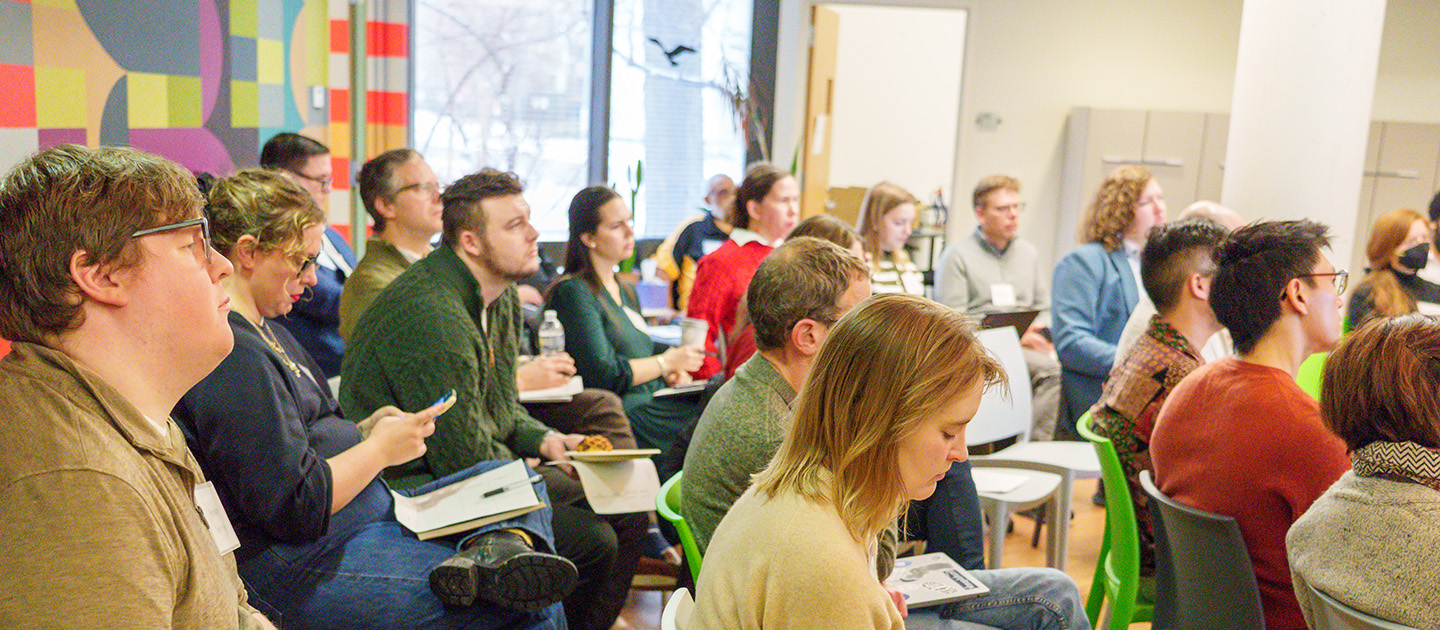
At the Jan. 16 symposium “Advancing the Science of Engagement in Digital Safety Research,” the Northwestern University Center for Human-Computer Interaction + Design (HCI+D)—a collaboration between Northwestern Engineering and Northwestern’s School of Communication—convened bold thinkers in design, public health, tech, and advocacy to explore strategies around the ethical and effective community engagement of users facing identity and health-related vulnerabilities in digital spaces.
Symposium participants—which included faculty, members of community-based organizations, industry researchers, and graduate students—learned that digital safety is one part safeguarding systems and data by building secure systems and deploying reliable and trustworthy tools. But digital safety is also a human challenge.
Many digital risks ultimately arise from human behavior, judgment, and social dynamics. So, it is important to protect people’s privacy, well-being, and ability to participate online without fear of harm or unintended consequences.
“The symposium uniquely convened researchers, community organizations, and industry leaders—bridging technologists and social scientists to address digital safety holistically,” said Liz Gerber, codirector of HCI+D, professor of mechanical engineering at the McCormick School of Engineering, and professor of communication studies in the School of Communication. “This interdisciplinary integration ensured research, methods, and interventions discussed were more implementable because they account for systemic impacts.”
 The event organizers included Andrew Berry, assistant professor of medical social sciences at Northwestern University Feinberg School of Medicine; Calvin Liang, assistant professor of communication studies at Northwestern’s School of Communication; Kathryn Macapagal, associate professor of medical social sciences and psychiatry and behavioral sciences at Feinberg, and Will Liem, a PhD student in social sciences and health at Feinberg.
“Our intellectually diverse academic leaders convened a digital safety symposium to translate multidisciplinary scholarship into evidence-based interventions with measurable real-world impact,” Gerber said.
The symposium uniquely convened researchers, community organizations, and industry leaders—bridging technologists and social scientists to address digital safety holistically. This interdisciplinary integration ensured research, methods, and interventions discussed were more implementable because they account for systemic impacts.
Liz GerberCodirector of the Center for Human-Computer Interaction + Design, Professor of Mechanical Engineering at Northwestern Engineering, and Professor of Communication Studies in Northwestern's School of Communication
Defining safety
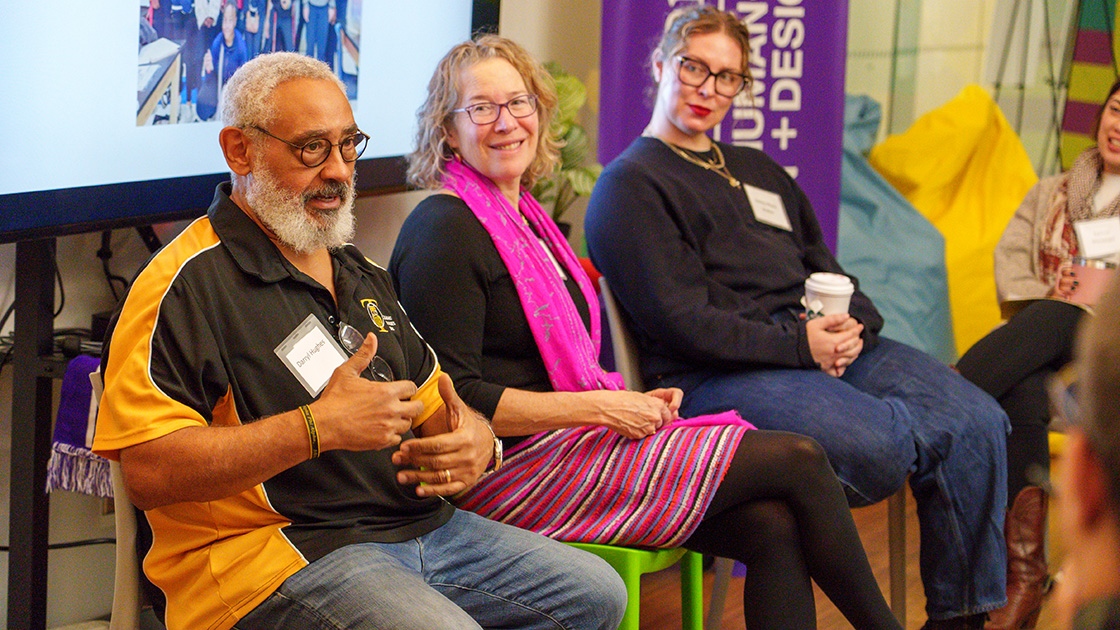
Ashley Marie Walker, Google UX Researcher in Trust and Safety; Emily Ozer, professor of community health sciences at the University of California, Berkeley; and Darryl Hughes, CEO and Co-founder of Hughes Who Technologies Studio, led a table-setting conversation to frame the day’s discussions on digital safety. Namely, what is it?
Attendees didn't try to land on one unified definition of safety but instead focused on how to define safety within specific contexts, such as a research project or policy recommendation. The group also noted that it is important to both minimize harm and to plan for how to address harm when it inevitably occurs. By identifying and contextualizing specific harms, practitioners can pinpoint what it means to mitigate that harm.
"Participants noted that what constitutes harm varies depending on the population, technology, and circumstances involved, making context-specific definitions more meaningful than broad generalizations,” said Liem.
The panelists also introduced best practices for centering community expertise when it comes to research and discovery. Ozer, for instance, shared her experience collaborating with the San Francisco Unified School District and the RYSE Youth Center to advance youth-led participatory action research. Attendees discussed how to approach community members as partners, how to work toward community-defined outcomes, and how to build more reciprocal, transparent relationships with community partners.
Hughes reinforced culturally responsive principles, Liem explained, by emphasizing the importance of building sustained relationships with trusted local leaders and being transparent about what both researchers and communities gain from partnerships.
Harm reduction interventions
During the symposium’s second session, attendees examined case studies in digital safety and engagement. The Feinberg team facilitating the discussion included Lauren Beach, assistant professor of medical social sciences and preventive medicine; Carol Haywood, assistant professor of medical social sciences; Kaylee Kruzan, research assistant professor of preventive medicine; and Jonah Meyerhoff, research assistant professor of preventive medicine and psychiatry and behavioral sciences.
Acknowledging the nuance surrounding unsafe practices or behaviors, the group underscored the importance of harm reduction interventions that prioritize autonomy and reflect how people learn, make decisions, and interact with one another. In terms of navigating identity data and confidentiality, for instance, attendees discussed the need for patient education about electronic health records and digital data, given the inconsistencies in how sensitive demographic data is stored or used in the electronic health record.
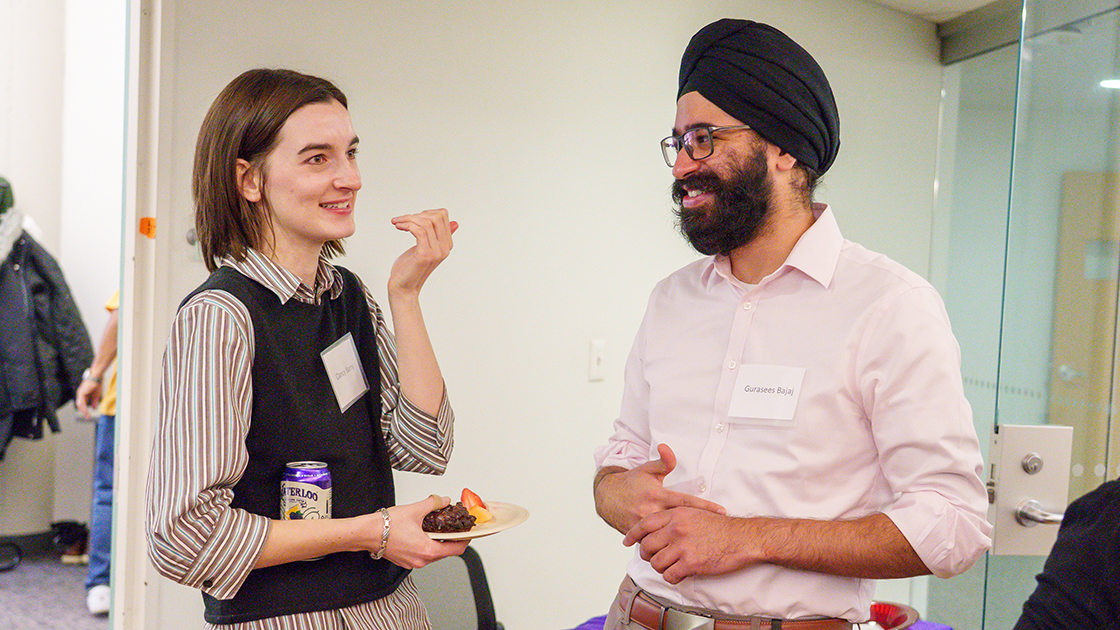
During the afternoon lunch and networking session, participants gathered in small groups to share their work and co-create a research agenda. Moving forward, a symposium working group that includes Liem and Macapagal is collaborating with an online youth advisory council to reimagine informed consent for digital research with adolescents. The team aims to co-designing consent materials and processes that make ongoing consent comprehensible and accessible in online environments like Discord.