

Anticipating Threats, Ensuring Accountability in AI Security
Day-long conference highlighted research projects in the Northwestern Security and AI Lab
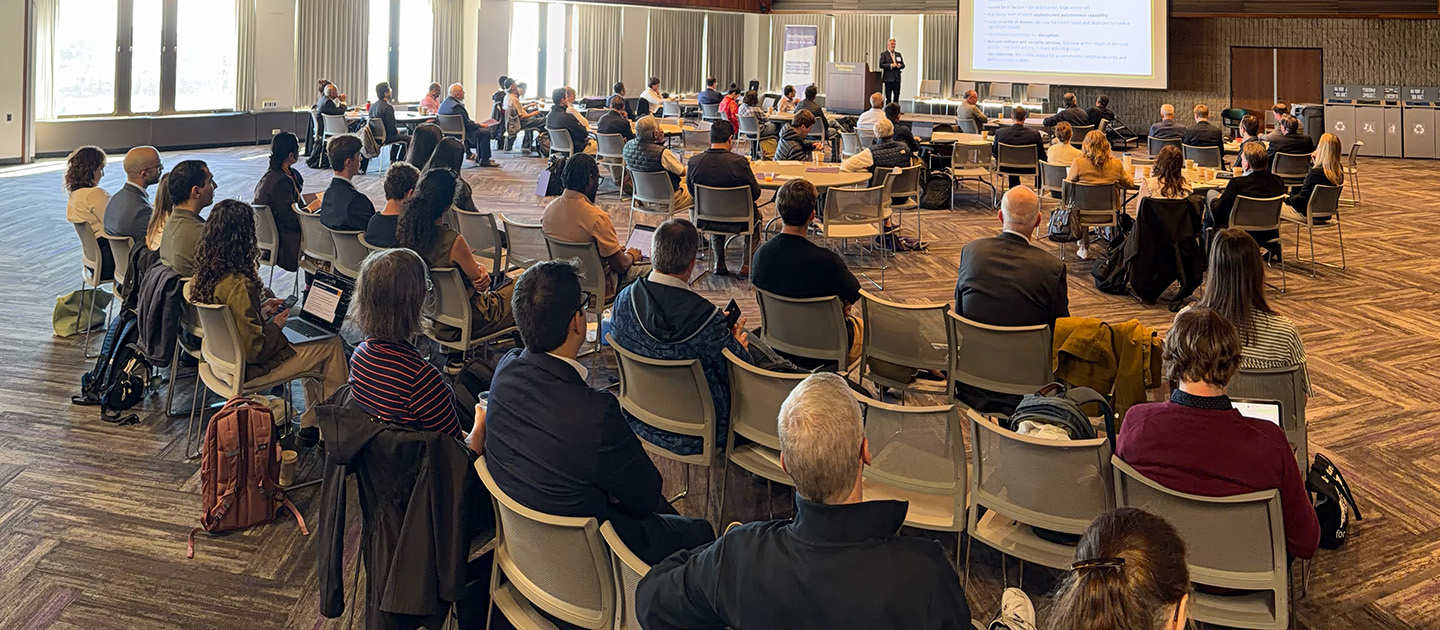
As AI becomes central to national and global security strategies, errors or exploits in algorithmic decision-making carry higher stakes, with the potential to shift the global balance of power.
On October 22, the Northwestern Security & AI Lab (NSAIL) convened leading experts from around the world for the annual Conference on AI & National Security. The event explored critical issues around the role of frontier and military AI in national security, counterterrorism, and geopolitical decision-making. More than 425 individuals registered to attend, either in person or online.
“U.S. national security, and indeed all of our security, depends on decision makers both leveraging AI and mitigating the threats AI poses,” Northwestern Provost Erik Luijten said in his opening remarks. “That is where research, dialogue, and gatherings like this come in—and why Northwestern is committed to harnessing our hallmark culture of interdisciplinarity to build networks across the University and beyond, enabling us to learn from one another."
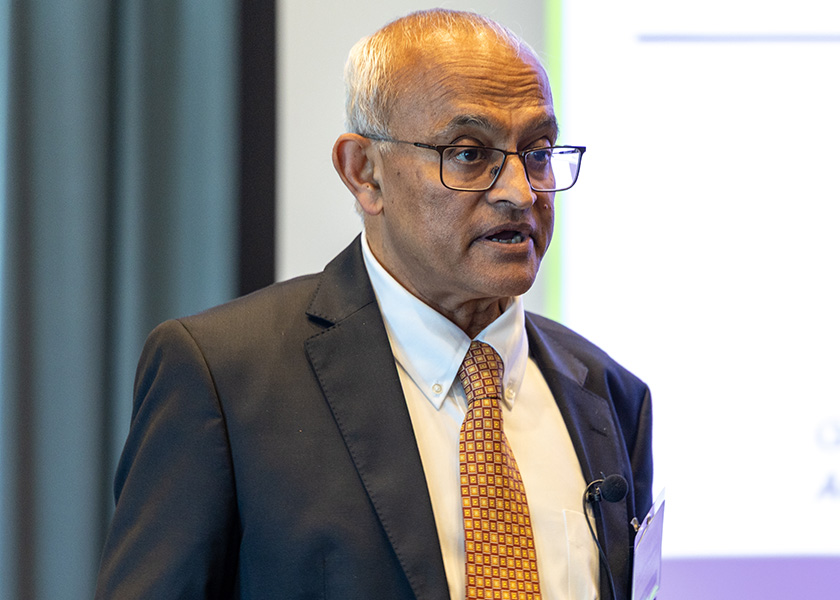
NSAIL is led by V.S. Subrahmanian, Walter P. Murphy Professor of Computer Science at Northwestern Engineering and a faculty fellow at the Northwestern Roberta Buffett Institute for Global Affairs. The lab conducts fundamental research in AI relevant to issues of cybersecurity, counterterrorism, and international security.
“My lab predicts what the adversary is going to do before they do it and examines how we might defend against the threat, knowing full well that the threat vector itself is not likely to be exactly what we think it might be,” Subrahmanian said. “This is a multidisciplinary problem… A collaborative venture involving people with security expertise and AI researchers like those in my lab is important.”
The conference, cohosted by Rinn AI and the University College Cork, addressed several key questions, including:
- Is AI changing the fundamental nature of war, terrorism, surveillance operations, malware, and influence campaigns, or compressing the time and expertise needed to act?
- What are the rules of engagement and oversight necessary to effectively accelerate operational speed and ensure meaningful accountability of AI in security contexts, particularly when governance power and sovereignty increasingly hinges on technology providers who own the intellectual property, control the data, and set the standards?
- Who is accountable when AI-enabled decisions go wrong and how do we guard against nominal oversight, where a human overseer “approves” an AI decision without meaningfully understanding or challenging it?
- How do we defend against cheap, mass-produced threats that allow relatively weak bad actors to impose disproportionate costs through drones, adaptive bots, open-source penetration tools, and deepfakes?
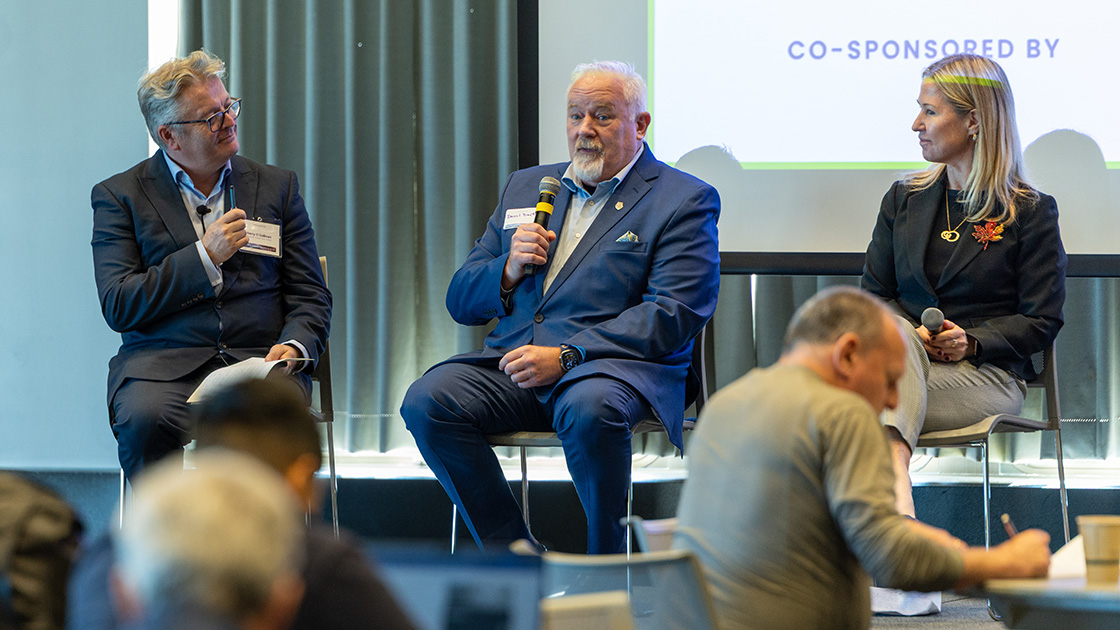
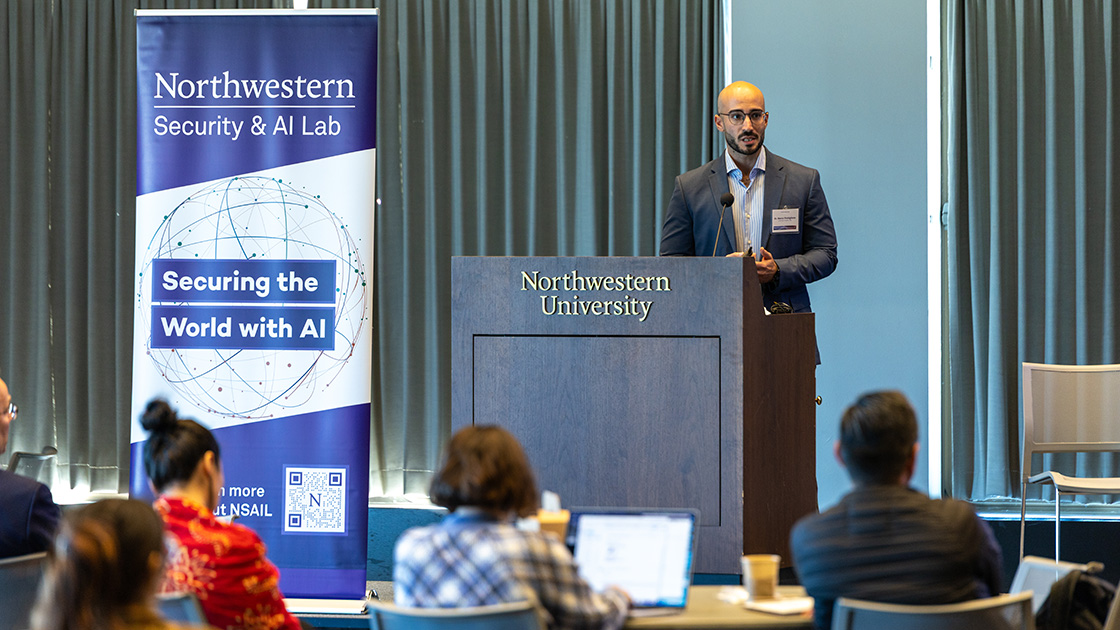


Conference speakers represented all three event co-hosts, in addition to the Australian Consul-General in Chicago, Balsillie School of International Affairs, Bloomberg, KBR National Security Solutions, Netherlands Defence Academy, and the US Department of Defense Joint Artificial Intelligence Center. Presentations and interactive panel discussions explored topics including AI, terrorism, and warfare; data-centered governance; drones and counter-drone policies; protein language models; social influence operations; and technology risk.
“The role of AI in defense hinges on timing. Whoever moves first—either to harness AI for proactive defense or for malign purposes—will likely come out ahead,” Subrahmanian said. “This is why the NSAIL Conference on AI and National Security is both timely and critically important.”