

Turning the Tide
Northwestern Engineering researchers develop technologies to protect, manage, and recover resources from our water supply.


Northwestern University's 10th Annual Water Symposium was held May 6 at the Ford Engineering Design Center and hosted by the NU Center for Water and Northwestern Israel Innovation Project. Expanding on NU Water’s focus on international water solutions, the symposium’s theme was “Water Security in Israel, the Middle East and Africa: Regional solutions for the climate and water crisis.”
“It's an explicit goal of the symposium to help people understand the challenges they're dealing with, research needs, and Northwestern’s capability,” said Aaron Packman, a professor of civil and environmental engineering at the McCormick School of Engineering and codirector of NU Water, “and then really talk through solutions.”
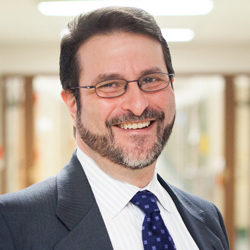
Moderated by Sera Young, professor of anthropology at the Weinberg College of Arts and Sciences and codirector of NU Water, the event featured remarks and panel discussions with Grace Oluwasanya of the United Nations University Institute for Water, Environment, and Health; Noam Weisbrod, dean of the Blaustein Institutes for Desert Research at Ben‑Gurion University of the Negev; and Akintomide Afolayan Akinsanola of the University of Illinois Chicago and Argonne National Laboratory.
Aaron Salzberg, former special coordinator for water at the US Department of State and former director of the Institute for Water & Health at the University of North Carolina at Chapel Hill, delivered an introduction. Welcoming remarks were given by Bryan Brayboy, dean of Northwestern University’s School of Education and Social Policy, and Carlos Montezuma Professor of Education and Social Policy; and Eric Mugaa, cabinet secretary for the Kenyan government’s Ministry of Water, Sanitation, and Irrigation.
Founded in 2016, NU Water’s mission is to promote water security globally via better access to reliable and safe water for a healthy life. The center works to achieve this through research, education, and policy-relevant outreach around the world.
The 2026 symposium capped off a week of activity that brought multiple water‑focused efforts together at Northwestern, creating space for deeper engagement across regions and sectors. Throughout the week, the NU Water team hosted a Kenyan water ministry delegation, formal meetings with university leadership and students, and working meetings focused on implementation. Folding those efforts together helped surface both the scale of global water challenges and the opportunity for coordinated, interdisciplinary responses.
Northwestern Engineering researchers develop technologies to protect, manage, and recover resources from our water supply.

The projects by PhD students Ethan Halingstad and Joaquina Noriega combine fieldwork, data analysis, and community collaboration to address water access and quality.

Organized by Northwestern Engineering’s Aaron Packman and Jennifer Dunn and Weinberg’s Sera Young, the interdisciplinary event united faculty to tackle water challenges and sustainability.
“Northwestern is leading in the water innovation space, developing new water technologies and innovative approaches to water data collection,” Packman said. “These events let us work with partners, not just to develop solutions, but to deploy solutions internationally.”
For NU Water, that exchange is not incidental but intentional.
Discussions throughout the symposium emphasized collaboration as a central driver of impact, particularly as water insecurity affects communities in vastly different contexts. Speakers highlighted the importance of sharing data, expertise, and lived experience, ensuring that solutions developed in one region can be adapted and applied elsewhere.
Panelists also focused on persistent global challenges, including the lack of access to clean and reliable water for rural populations. While many effective technologies already exist, participants noted that deploying them at scale remains difficult without strong partnerships, local engagement, and better data to guide decisions. Conversations centered on how research institutions can help bridge that gap by aligning technical expertise with regional needs.
The symposium also laid groundwork for future collaboration across Israel, Africa, and the United States, building on long‑standing partnerships and emerging opportunities. A major focus was integrating community‑level survey data with technological and infrastructure‑based approaches to better assess needs and measure outcomes. That work is expected to continue over the coming months, with follow‑up efforts already underway.
“This helps clarify the challenges and focus on what we can do today, and what’s needed next to deliver safe water to people who don’t have it today,” Packman said. “The most important outcome was a real commitment to continue partnerships and take concrete next steps toward implementation.”
The event underscored the role of the Northwestern Water Symposium as a cornerstone of NU Water’s mission. Now in its 10th year, the symposium remains a key forum for connecting researchers with policymakers, practitioners, and international partners, moving ideas from discussion to action.
“It’s a place where we refresh partnerships, form new ones, and actually carry things forward,” Packman said. “The goal is to have a real impact on people’s lives through water.”