

Engineering Reliable Water
Projects combine fieldwork, data analysis, and community collaboration to address water access and quality

From cities to rural communities, water flows efficiently when engineering systems integrate local geography and community inputs. Without such infrastructure, a pump failure could result in a rural village losing access to safe drinking water. Or, runoff from a sudden storm could spike an urban river's contamination levels for a few hours before settling again.
At Northwestern Engineering, researchers are studying these kinds of problems across very different environments to build more reliable systems. Their work blends technical analysis with fieldwork and partnerships with local organizations to understand how water systems function and how they can be improved.
That dual focus comes to life in the work of two PhD students, illustrating two complementary approaches. One focuses on designing and implementing water distribution systems that provide reliable drinking water in rural communities abroad. The other examines how pollution moves through urban rivers in real time, using high-frequency monitoring and modeling to reveal patterns that conventional sampling often misses.
Bringing Clean Water to Communities Abroad
Ethan Halingstad has translated engineering skills into tangible improvements for communities in Central America through work with the Chicagoland Professional Chapter of Engineers Without Borders. Halingstad, pursuing his doctorate in chemical and biological engineering, has contributed to water distribution projects in Guatemala and Nicaragua, focusing on providing reliable, safe, and sustainable drinking water to rural populations.

In Guatemala, Halingstad’s work involved two mountainous communities: Tzaput and Patzajito. Both projects aimed to deliver clean water efficiently using a combination of wells or pumps, storage tanks, filtration systems, chlorination, and gravity-powered distribution lines. Halingstad’s role varied by project. In Tzaput, he worked with the local in-country engineers to write a comprehensive operations and maintenance manual and coordinate training for the local water committee.
“The project reinforced the importance of designing with local maintenance capacity in mind,” said Halingstad, a member of Professor Krishna Shrinivas’ lab and graduate researcher with the Center for Synthetic Biology. “We guided communities on collecting dues to cover electricity for pumps and to build a reserve fund for repairs or replacements. The ultimate purpose is not simply to build something that works for a few years, but to equip the community to sustain and operate the system independently well into the future.”
In Patzajito, Halingstad was involved in design and implementation for a community that previously lacked a central groundwater source. His project included designing a 1,000-foot deep well and extensive downstream distribution lines covering nearly five miles. In particular, Halingstad helped collect data to generate as-built drawings and a refined hydrodynamic model to predict areas of high and low pressure, helping ensure the system functions reliably despite steep terrain.
Other than one week on site, Halingstad had to work remotely from the US, which presented logistical challenges. Satellite-based design sometimes conflicted with on-the-ground realities. Local engineers adjusted his plans to preserve community space while maintaining proper water flow.
“Local insight often makes solutions simpler and more effective,” Halingstad said. “The community’s input guided decisions about tap placement, construction methods, and maintenance practices, which is essential for long-term sustainability.”
Halingstad said the human connections are as meaningful as the engineering outcomes. In Tzaput, residents presented the team with handmade mantlepieces, and children in Patzajito greeted the team daily at school gates.
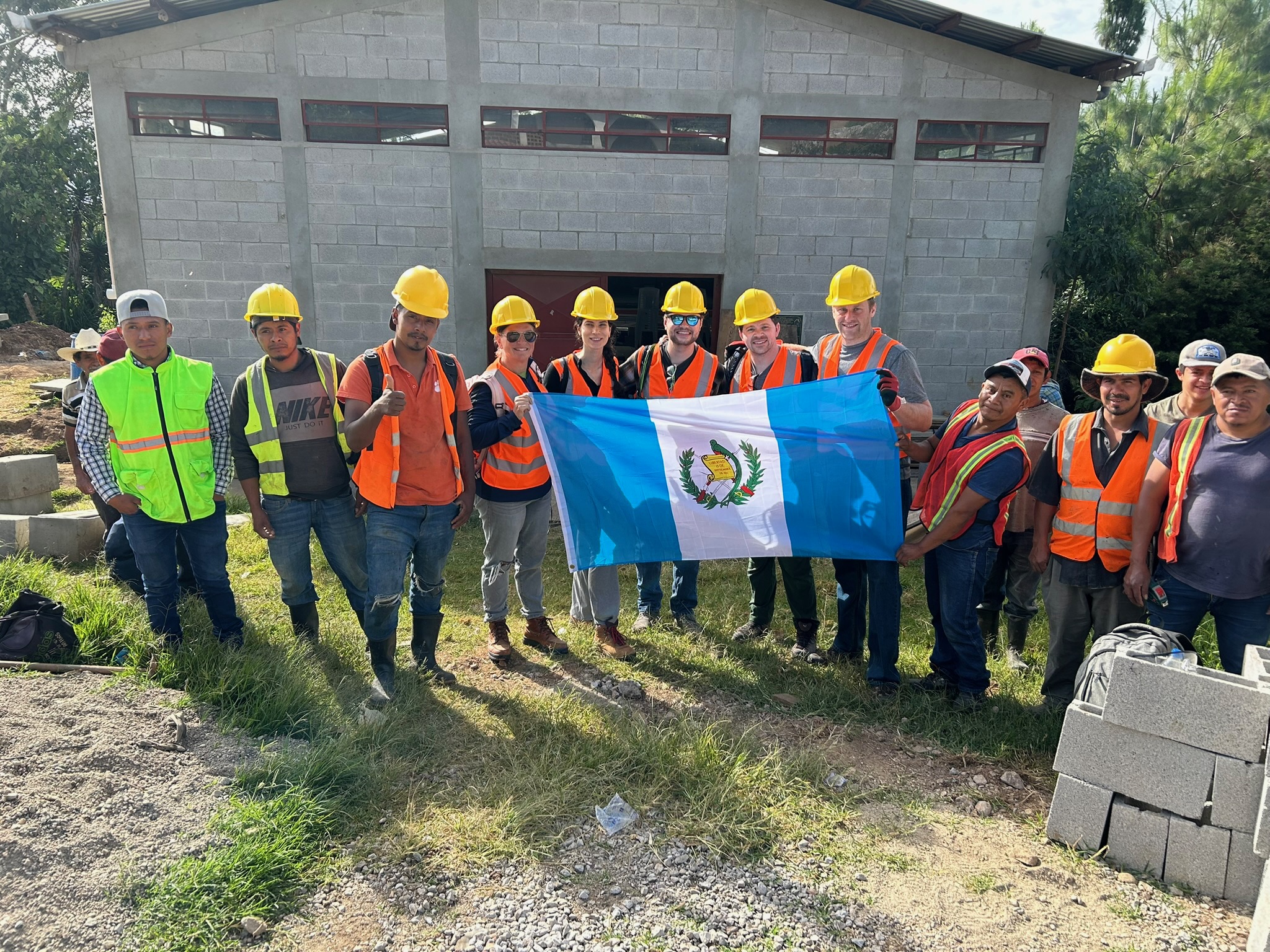
“There is something intrinsic about how easy it can be to really connect with people from totally different backgrounds,” Halingstad said. “People are people, and we can make a real difference in their lives when we work together with shared empathy.”
Halingstad said the experience informs his broader approach to problem-solving and research. Working in resource-limited settings has reinforced the importance of designing solutions that are technically sound, locally appropriate, and maintainable by the community. For him, the projects provide motivation during his PhD pursuit, offering tangible impact alongside his more abstract, physics-focused research.
“These projects show that strong communication, cultural context, and attention to practical details can make engineering solutions truly sustainable,” Halingstad said. “It’s rewarding to see how technical work can translate into real improvements in people’s daily lives.”
Mapping Urban Water Pollution in Real Time
PhD student Joaquina Noriega is examining how pollution moves through urban river systems and why contamination often spikes at particular times and certain places. Working in the lab of Professor Aaron Packman, she is part of SmartWater, a multi-institutional and international collaboration between Northwestern and universities and agencies in the United Kingdom.
The project centers on identifying pollution “hot spots” and “hot moments,” defined as the locations and time periods when contaminants are mobilized and exceed critical thresholds. Rather than treating water quality as relatively constant between routine sampling events, the team deploys high frequency environmental sensors along urban river networks to capture rapid changes during storms and other shifts in hydrologic conditions.
Those data are analyzed using network and data science approaches and mathematical models, alongside stakeholder knowledge of the watershed. The goal is to better understand how rainfall, groundwater dynamics, and land use interact to influence contaminant transport at the watershed scale.
“The project is driven by the goal of transforming how we diagnose, understand, predict, and manage water pollution,” Noriega said.
Urban rivers are not static systems. Their boundaries and flow paths expand and contract in response to precipitation and infrastructure, altering how pollutants move and where they accumulate. Conventional monitoring strategies, which often rely on periodic sampling at fixed sites, can miss short-lived but consequential contamination events.
By focusing on spatial and temporal variability, the research seeks to provide a clearer picture of when and where interventions may be most effective, particularly in densely developed watersheds.
“Pollution doesn’t happen evenly across time or space, and SmartWater is trying to tackle exactly that challenge by identifying the spatial and temporal drivers of contamination at the watershed scale,” Noriega said.
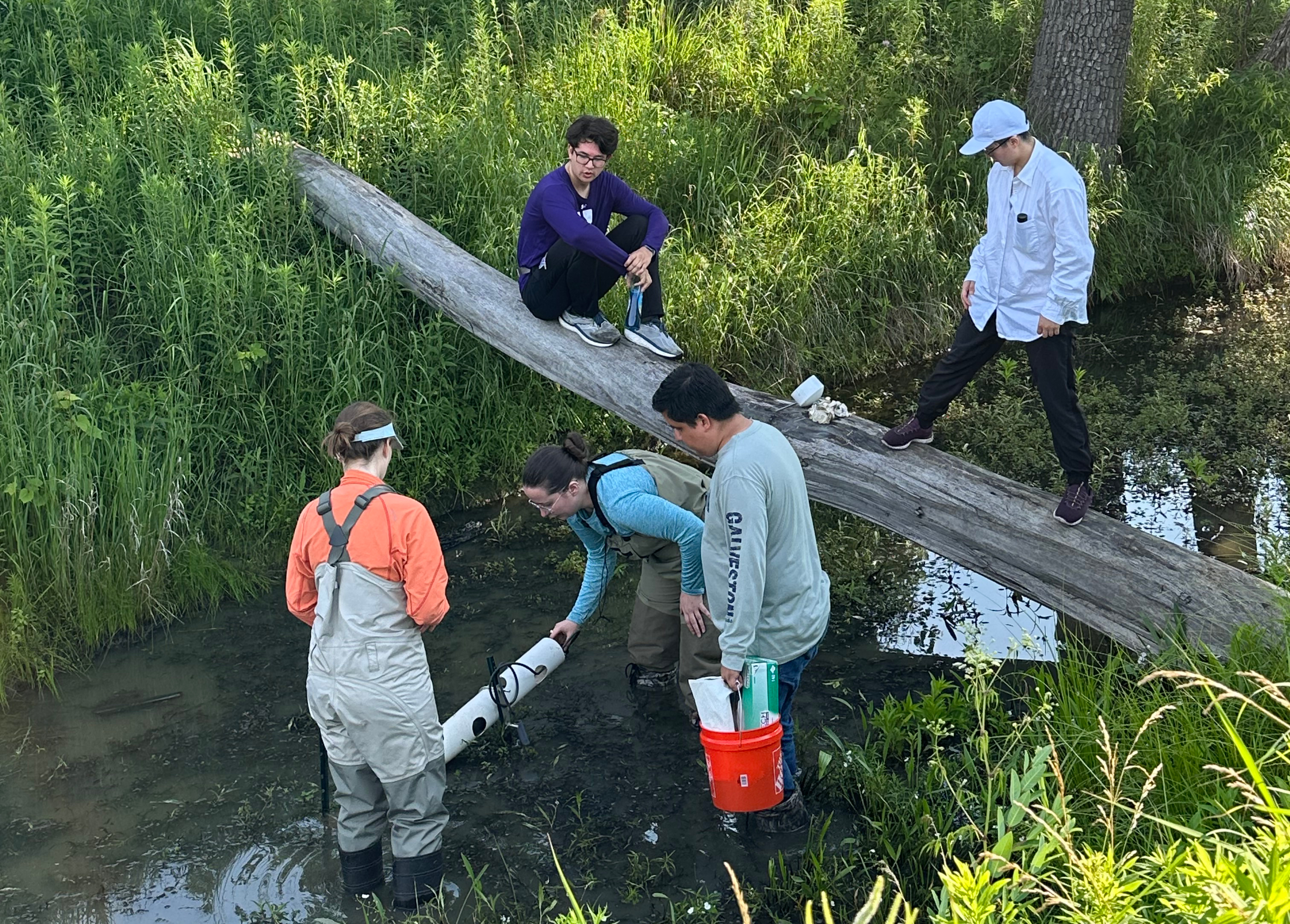
In the Chicago region, Noriega and her collaborators are collecting high frequency water quality data along an urban river network to examine patterns in low-lying areas and assess how land use and weather events shape those trends.
The project works with regional partners including Current through its H2NOW program, the Metropolitan Water Reclamation District of Greater Chicago, the United States Geological Survey, The Nature Conservancy, and several municipalities in Cook County, including the Village of South Holland and the Village of Hazel Crest.
“The high-frequency water quality data we’re collecting along an urban river network is helping us uncover pollution patterns in low-lying urban areas and understand how land use and weather events influence these trends,” Noriega said. “This kind of insight can inform smarter city and infrastructure planning, guide more targeted pollution mitigation strategies, and prepare cities for future climate-related challenges.”
Both projects reflect a shared emphasis on understanding water systems as dynamic, context-dependent networks shaped by local conditions, infrastructure, and human use. Whether designing distribution systems in rural communities or tracking pollution in urban rivers, the work highlights the importance of combining technical analysis with on-the-ground knowledge. Together, these approaches point toward more informed, adaptable strategies for managing water resources across diverse environments.