

Leading Research at the Intersection of AI and Global Security
Day-long conference highlighted research projects in the Northwestern Security and AI Lab
AI is a central force shaping geopolitical power imbalances, becoming increasingly integral to national security planning and fueling intense competition for technological supremacy and economic dominance among nation-states. AI development is accelerating rapidly with the promise of enhancing the human condition globally, but with the risks and vulnerabilities that come with algorithmic decision-making in high-stakes settings.
To explore critical issues around AI-enabled terrorism and warfare, emerging defense applications, and governance frameworks that ensure transparency and accountability, on Dec. 11 the Northwestern Security & AI Lab (NSAIL) convened leading experts in AI, cybersecurity, and national security for the annual Conference on AI & National Security. More than 600 individuals registered to attend, either in person or online.
While AI offers enormous promise, it also demands vigilance, ethical foresight, and international collaboration. Northwestern’s Vice President for Research
“AI is changing our world,” said Eric J. Perreault, Northwestern’s vice president for research, in his opening remarks. “Nowhere is that more true than in national and global security. Whether it's stealing sensitive information, disrupting core services, or spreading disinformation, we're seeing an increase in the number, scale, and impact of cyber threats around the globe. While AI offers enormous promise, it also demands vigilance, ethical foresight, and international collaboration.”
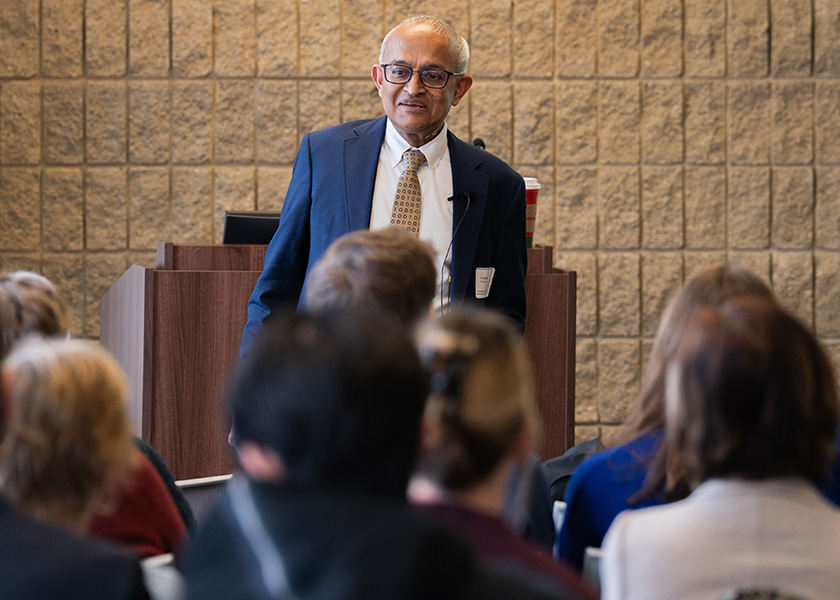
Led by V.S. Subrahmanian, Walter P. Murphy Professor of Computer Science at Northwestern Engineering and a faculty fellow at the Northwestern Roberta Buffett Institute for Global Affairs, NSAIL is conducting fundamental research in AI relevant to issues of cybersecurity, counterterrorism, and international security.
“Northwestern is committed to this work, embodied in the support of NSAIL, which has rapidly become an international center for research at the crossroads of AI and security, working on detecting deepfakes, uncovering deception in videos, safeguarding cities from drone threats, and so much more,” Perreault said.
The conference was cohosted by the University College Cork (Ireland), the Insight SFI Research Centre for Data Analytics, and the Northwestern Network for Collaborative Intelligence (NNCI).
“We cannot secure the world from malign actors if we cannot foresee the threats they pose,” said Subrahmanian. “That is exactly what NSAIL does: identify threats posed by adversaries before they come to fruition and proactively mitigate them.”
The conference addressed four key questions:
- How will AI-driven warfare and terrorism evolve in coming years? What kinds of new technology can help identify and mitigate these threats?
- As governments and institutions seek stronger AI governance models, what guardrails are essential for effective oversight?
- How will societies counter increasingly advanced phishing, scams, and malware powered by AI?
- And as deepfakes make their way into courtrooms, how can courts preserve trust in digital evidence?
“Different nations and stakeholders have different perspectives on how AI will develop and how it should be governed. A multidisciplinary, multinational, multistakeholder collaboration is needed to understand differences and chart a cohesive step forward,” Subrahmanian said.
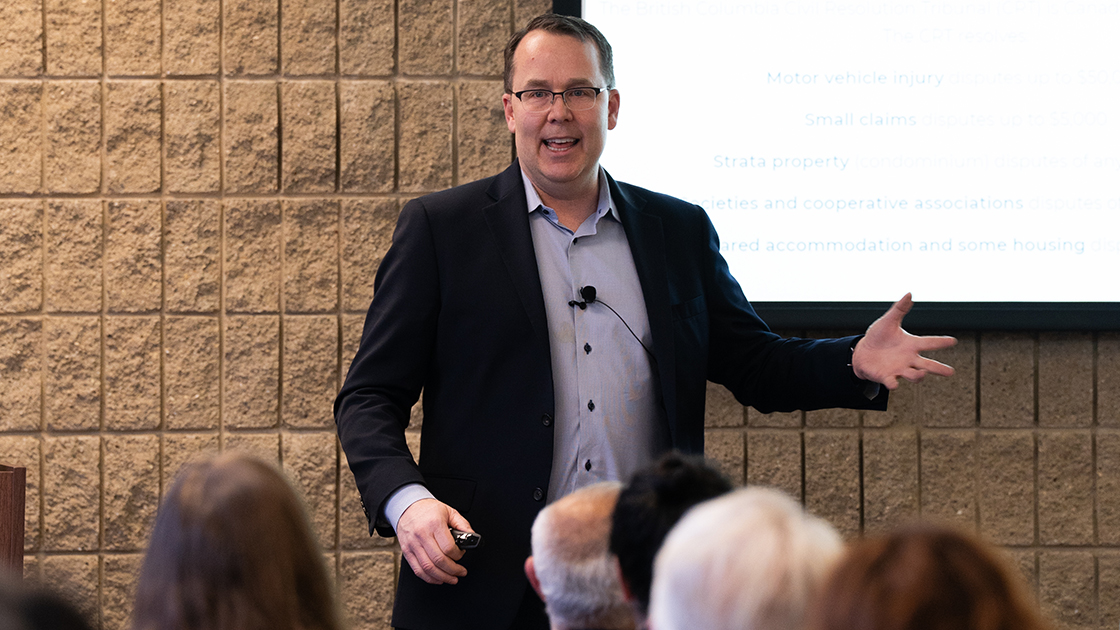
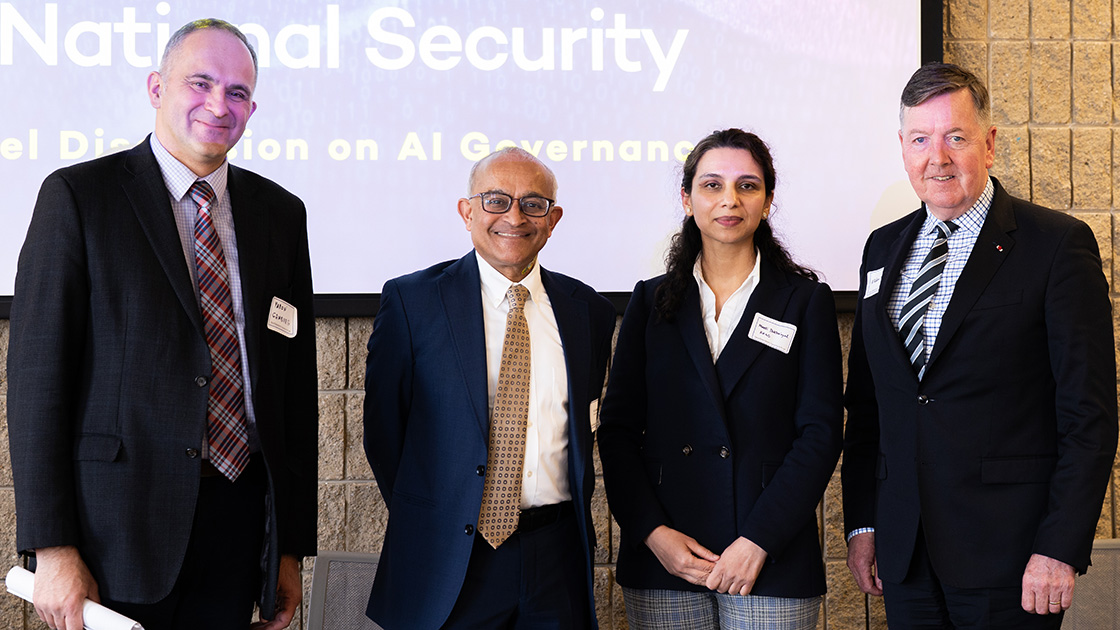
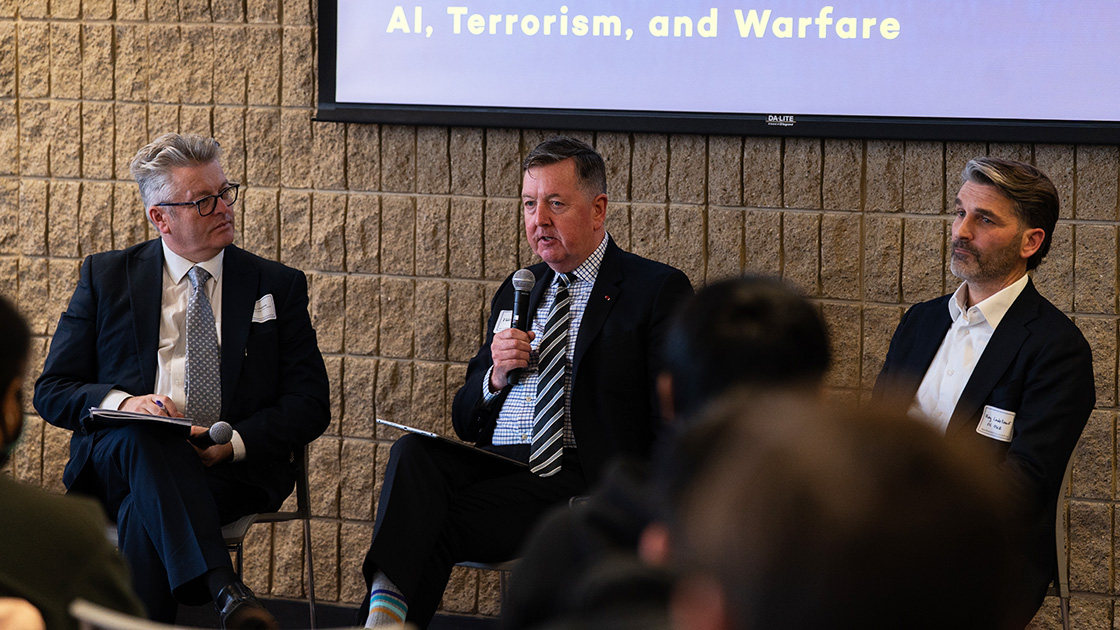
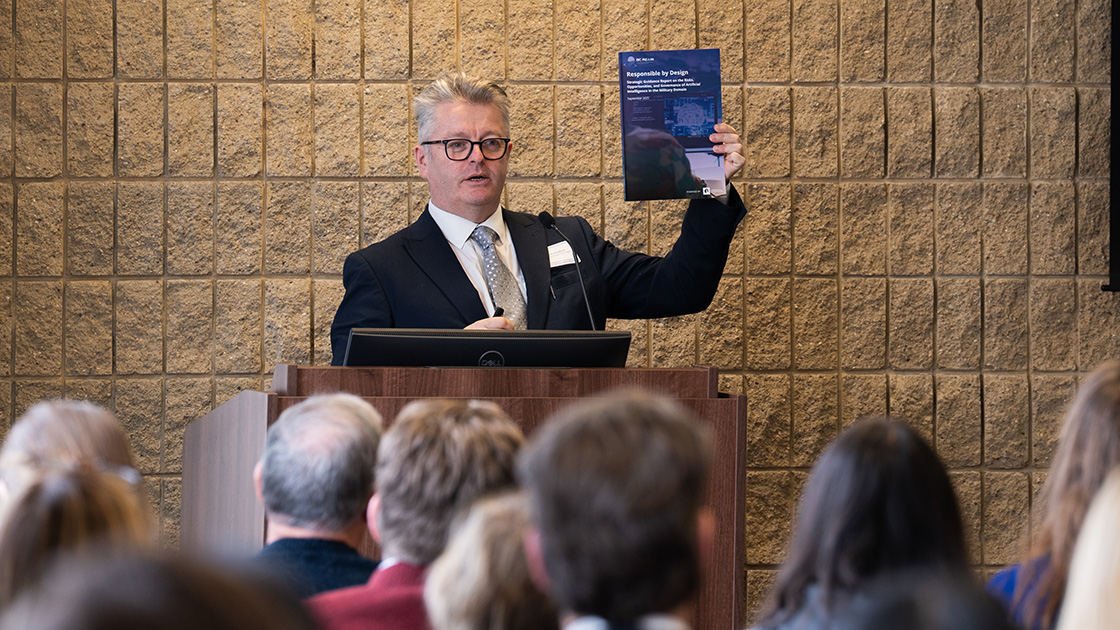
Conference speakers represented all three event co-hosts, in addition to Australian National University, Irish Defence Forces, London School of Economics, Netherlands Ministry of Defence Data Science Centre of Excellence, Rand Corporation, and the University of Paris Seine-Saint-Denis. Presentations and interactive panel discussions dove into topics including drones, AI, terrorism, and warfare; responsible AI governance; AI-enabled phishing, scams, and malware; cybersecurity; and deepfakes in court.