
The Problem
Viral membrane proteins are the proteins of choice in vaccines but are difficult to produce quickly and reliably for use in vaccines, limiting rapid response during emerging outbreaks.

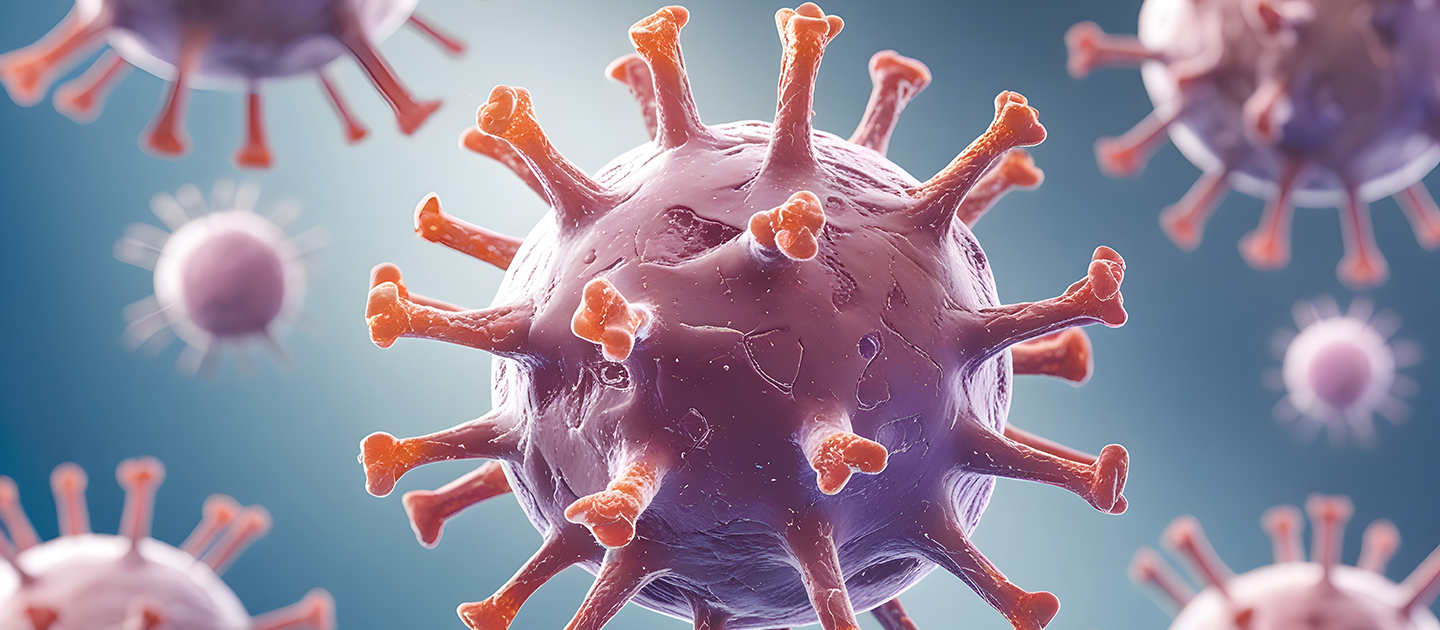
Viral membrane proteins are the proteins of choice in vaccines but are difficult to produce quickly and reliably for use in vaccines, limiting rapid response during emerging outbreaks.
Researchers have developed a cell-free system to directly synthesize and insert viral membrane proteins into liposomes, creating vaccine candidates in a single step.
This approach could enable faster, more adaptable vaccine production without the need for live cells or cold storage, expanding access during future outbreaks.
Professor Neha Kamat, Graduate student Vivian Hu
A multi-institutional research team with Northwestern Engineering’s Neha Kamat has developed a new method for rapidly assembling vaccine nanoparticles that could improve how the world responds to future pandemics. The technique uses cell-free protein synthesis (CFPS) to embed viral membrane proteins into synthetic liposomes, forming a vaccine candidate that led to robust neutralizing antibody responses in mice.
The study focuses on the Nipah virus, a neurological and respiratory disease with a fatality rate as high as 75 percent and no currently approved therapies or vaccines. Because of this, the World Health Organization includes Nipah on its list of viruses with pandemic potential. The research team began developing the vaccine during the COVID-19 pandemic, recognizing the need for faster vaccine development methods.

“In a sense, we were lucky with COVID-19 that a lot of research had already been done on coronaviruses, causing leading researchers to have insight into which effective antigens should be delivered in a vaccine,” said Kamat, associate professor of biomedical engineering and (by courtesy) chemical and biological engineering at the McCormick School of Engineering. “But that could easily not be the case for a future epidemic where less is known about a potential virus. We need ways to rapidly assemble and screen vaccine formulations that present the most effective proteins for a given virus.”
Beyond the findings specific to Nipah virus, the platform could be adapted to address a broad range of viral threats or even therapeutic vaccines for cancer. The method’s simplicity and speed make it especially promising for global vaccine access, particularly in areas with limited refrigeration and infrastructure.
The new approach enables vaccine components to be made quickly without live cells, which reduces the time and complexity typically involved in developing traditional vaccines. Cell-free protein synthesis systems contain the molecular machinery from cells but operate in vitro, allowing for protein expression in just a few hours. The system produces membrane proteins that can fold and insert themselves into lipid vesicles without the help of protein chaperones, which are normally required inside living cells
The research, presented in the paper “Cell-Free Expression of Nipah Virus Transmembrane Proteins for Proteoliposome Vaccine Design,” published in June in the journal ACS Nano. Kamat and Cornell University professors Susan Daniel and Hector C. Aguilar were the paper’s co-corresponding authors.
Neha KamatAssociate Professor of Biomedical Engineering
The team’s new method creates tiny fat-based bubbles called liposomes that copy the structure of real viruses. These bubbles display important proteins from the Nipah virus on their surface, which helps the immune system recognize and respond to a potential infection. In this study, researchers added two key Nipah proteins, NiV F and NiV G, into the liposomes. NiV F helps the virus fuse with host cells, and NiV G helps it attach. To improve how well these proteins were produced and inserted into the liposomes, the team removed a segment from NiV F that normally directs the protein to the right organelle in a living cell, but that is unnecessary when working outside of cells, making it easier to work with.
They also adjusted the types of fats in the liposome, adding ingredients like phosphatidylethanolamine and phosphatidylserine, which made the membrane more flexible and helped the proteins settle in better. These changes led to a stronger immune response.
“Although NiV F and G proteins were produced using a bacterial cell-free system, the synthesized proteins were still able to bind to conformational antibodies detecting native folded conformation,” Aguilar said.
The researchers also added lipid A, an ingredient that helps boost the immune response, to the liposome mix. Mice that received liposomes with both viral proteins and lipid A produced more antibodies than those that got simpler versions. Among the two proteins tested, NiV G triggered a stronger immune response, making it the more dominant one.
“This work demonstrates how powerful CFPS can be for integrating viral membrane proteins into customizable liposome formulations,” Daniel said.