Overview / CareersAI Careers in Transportation
It's easy to think of self-driving cars when it comes to AI and transportation, but AI's influence on the industry reaches far beyond individual automobiles. While safety features and self-driving capabilities are two of the most prevalent uses of AI in transportation, AI can also be applied for traffic management, public transport optimization, predictive maintenance of vehicles, route planning, and fleet management. AI's reach will ultimately impact all modes of transport, whether it’s by land, in the air, or in water.
What would an AI professional contribute to the transportation industry?
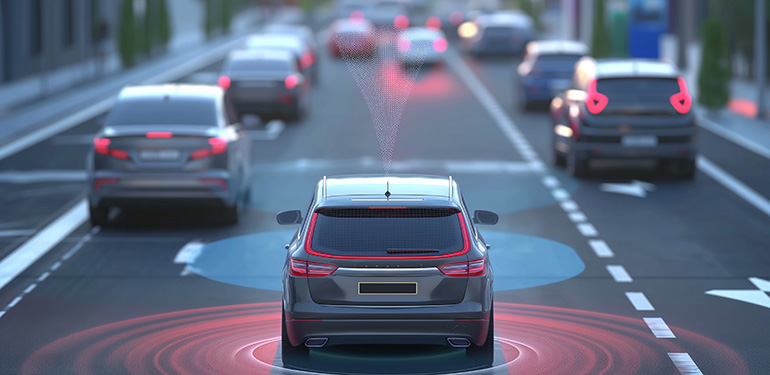
Computer vision and neural networks are at the core of the technologies that have delivered increasingly better safety features in vehicles and even partial or full self-driving. An AI professional would be expected to help train and test better AI for a variety of tasks. These tasks could help consumer products like vehicles augment the driving experience, introduce new safety features,or develop self-driving behaviors. They also could involve developing better and more efficient algorithms while adhering to regulations and safety guidelines.
What are the biggest opportunities and challenges for AI in the industry?
Opportunities abound. Traffic congestion remains a global pain point that AI can alleviate. AI is promising for logistics and supply chain efficiency, partially through the use of self-driving trucks. AI can also bring transformative change with improvements in energy efficiency.
The biggest challenges revolve around safety, compliance, and explainability. Vehicles and transportation infrastructure powered by AI need to comply with regulations and guarantee safety for humans while facilitating smooth operations. The AI technology must also be explainable so there is transparency around the quick decision-making process of self-driving cars, for example.
How does MSAI prepare students to lead in the transportation space?
MSAI students gain a well-rounded blend of theoretical knowledge and practical skills — via core courses and an extensive list of cross-disciplinary electives — that prepares them well for any industry. One of the ways they engage with practical training is through the Industry Capstone project, which gives them the opportunity to work with companies on solving challenging problems, including real-world transportation issues.
Where have MSAI students and alumni interned or worked?
- Tesla
- Mercedes-Benz
- Intramotev
- Roehl Transport
Featured Alumni

Ana Cheyre
MSAI '22, Data analyst for TeslaPart of Ana Cheyre's job responsibilities are to help manage Tesla's supply chain, which includes predicting how many containers it will need in upcoming quarters to transport materials and keep vehicle and energy storage system production rolling smoothly.
Her role involves building tools that help showcase supply chain data in easy-to-understand visuals to cross-functional teams, enabling decision-makers to develop strategies to maximize efficiency. That means teaching machines to turn mountains of data into appealing graphics that make sense to the human eye and mind.
“I am able to take raw data and craft it into something meaningful,” she said. “The end result can provide information that was previously hidden within the raw data itself.”