

Student ProjectsUganda Primary School Reconstruction Project
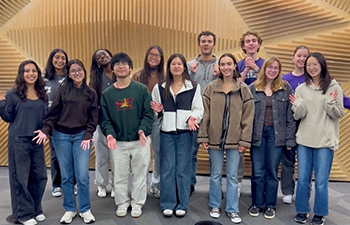
Project Manager
Connor Argenzio
Engineers Without Borders - Northwestern Student Chapter
Amount Requested
$5,000
Summary
The Northwestern chapter of Engineers Without Borders (EWB-NU) proposes the rebuilding of the Ebenezer Sosio Nursery and Primary School in Kapchorwa, Uganda. This project addresses a critical infrastructure need by providing students in a remote and underserved community with safe, durable, and accessible learning environments. Following an initial assessment trip, EWB-NU will design and oversee the construction of a new school building containing four classrooms, replacing temporary structures that currently offer limited protection from environmental conditions.
This project provides McCormick undergraduate students with a unique opportunity to apply engineering design, project management, budgeting, stakeholder engagement, and cross-cultural communication skills in a real-world humanitarian setting. Through the planning, design, and implementation phases, students will gain hands-on experience solving complex engineering challenges while working directly with community members, local officials, and construction partners.
The expected outcomes include the completion of a safe and sustainable classroom building, the incorporation of durable and environmentally responsible construction practices, and the creation of a stronger educational environment for current and future students. By combining technical learning with meaningful community impact, this project directly supports McCormick's mission of developing innovative, globally minded engineers committed to serving society.
Planned Activities/Investments
To achieve these objectives, the Northwestern chapter of Engineers Without Borders (EWB-NU) International Team will first finalize the architectural and structural designs for the new school building. Working closely with our Responsible Engineer in Charge (REIC), students will develop and refine the design using Revit to ensure the structure is safe, durable, and compliant with applicable engineering standards. The final design package will include floor plans, room dimensions, entry and exit locations, accessibility features, safety considerations, and other relevant site-specific details. We anticipate completing the design phase by the end of summer 2026.
In parallel, the team will complete the structural foundation and slab design for the building. This work will include determining foundation locations, slab thickness, reinforcement requirements, construction joints, and other structural details necessary to ensure the long-term stability and performance of the facility. All designs will be reviewed in collaboration with the REIC.
The team will also evaluate and select construction materials based on local availability, cost, durability, sustainability, and suitability for Uganda's environmental conditions. Current considerations include cement block construction due to its strength, longevity, and accessibility within the region.
Following the completion of the design phase, EWB-NU will initiate a contractor bidding and selection process. Qualified local contractors will be evaluated based on experience, cost, and ability to meet project requirements. The selected contractor will work alongside local stakeholders and EWB-NU to carry out construction of the school building.
These activities will prepare the project for successful implementation while providing McCormick students with hands-on experience in engineering design, project management, stakeholder engagement, and international development.
Impact
This project will have a meaningful and lasting impact on both the McCormick undergraduate community and the local community in Kapchorwa, Uganda. Over the course of three years, approximately 15 to 30 McCormick students will participate in a global humanitarian engineering initiative that strengthens their technical, leadership, project management, and intercultural communication skills. Through the project, students will apply classroom knowledge to real-world engineering challenges, conduct field assessments, collaborate with international stakeholders, and help manage the design and implementation of critical infrastructure. These experiences provide valuable hands-on learning opportunities that complement and enhance the McCormick educational experience.
At the same time, the project will directly benefit more than 280 students and their families by providing safe, durable, and accessible school facilities that support a more effective learning environment. Improved educational infrastructure will help create a stable and welcoming space for students while supporting the long-term growth of the school and the surrounding community.
The project's impact will be evaluated through multiple measures. Student outcomes will be assessed through the successful completion of technical deliverables submitted to Engineers Without Borders-USA, leadership reflections, and project debriefs. Community impact will be evaluated through follow-up communication with school administrators and local stakeholders, assessment of facility usage and condition, and monitoring of indicators such as student enrollment and community satisfaction. Together, these evaluation methods will help ensure the project achieves meaningful and sustainable outcomes for both Northwestern students and the Kapchorwa community.
Deliverables
Major Deliverables
-
Comprehensive site assessment and community needs evaluation
-
Architectural design package, including floor plans, building layouts, accessibility features, and site plans
-
Structural design package, including foundation and slab designs, material specifications, and construction details
-
Construction cost estimate, project budget, and procurement plan
-
Contractor bidding and selection process documentation
-
Construction of a new school building containing four classrooms
-
Training and handoff documentation for local stakeholders to support long-term operation and maintenance
-
Final project report, including technical documentation, impact assessment, and lessons learned
-
Student leadership development through hands-on participation in engineering design, project management, and international collaboration
Sustainability
This project is designed to be fully self-sustaining beyond the duration of Murphy funding. In addition to support from the Murphy Foundation, EWB-NU will pursue additional funding sources to cover the remaining project costs. Long-term ownership and responsibility for maintenance will be transferred to the Ebenezer School and local government, ensuring continued use and upkeep of the infrastructure. To maintain continuity within EWB-NU, current student leaders will train future chapter members and pass down project knowledge and responsibilities. The school design will prioritize durable, low-maintenance materials and locally sourced resources to minimize upkeep challenges. Ongoing community involvement will be supported through established partnerships with Mt. Elgon and EWB-Uganda, which will provide local expertise and coordination. Additionally, the school has committed to supporting long-term maintenance through financial contributions and labor, reinforcing local ownership and investment in the project's success.
Previous Project
EWB-NU has previously received Murphy Society funding for a similar school infrastructure project in Ecuador. Although unexpected travel restrictions prevented our team from completing the in-person implementation, we successfully finalized the school design, coordinated with our local partners, and transferred the funds and materials for the project to be completed on-site. This experience strengthened our chapter’s ability to adapt to changing conditions and maintain strong international partnerships. We have also completed other successful projects in Guatemala and Kenya.
Budget Overview
- Foundation and Concrete Work: $30000
- Wall Construction Materials: $35000
- Roofing and Weather Protection: $20000
- Doors, Windows, and Accessibility Features: $10000
- Contingency: $5000
Total Budget Amount: $100,000
Matching Funds
The total cost of this project is estimated to be approximately $100,000. We have already secured a $20,000 grant from the Thornton Tomasetti Foundation, which will support a portion of the project's construction costs. In addition, EWB-NU has submitted several grant applications to external organizations and foundations, though funding decisions are not expected until later this year.
Murphy Society funding would serve as a critical component of the project's overall financing plan. The remaining costs will be covered through a combination of additional grants, corporate sponsorships, private donations, and chapter fundraising efforts. EWB-NU has a strong track record of securing funding for international development projects and will continue to pursue partnerships and funding opportunities to ensure the successful completion and long-term sustainability of the project.
Faculty Adviser/Department
Russell Joseph/Electrical and Computer Engineering