

Student ProjectsNorthwestern Silicon Initiative Development
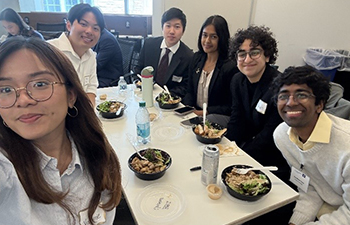
Project Manager
Muhammad Tahir
NU Silicon
Amount Requested
$5,000
Summary
NUSilicon is Northwestern University's first student-led semiconductor design and fabrication organization. The goal of this student organization is to give undergraduates experience with the full semiconductor design stack. Members will be working on RTL design and verification, physical layout, tapeout, and device fabrication. This grant would help support our team's first year on campus. We aim to build a working curriculum, establish lab and design infrastructure, and execute the organization's first complete semiconductor project cycle. The goal of this grant isn’t to produce one singular item, but to create an accessible club that will provide students exposure to rare industry-level technical experience.
Planned Activities/Investments
NUSilicon's work spans two divisions. The Design division will develop curriculum across its three subteams and standardize on the Cadence EDA suite paired with the open source SKY130 PDK. The design division's first year vision is a tapeout submission through a multi-project wafer program. In addition to multiple smaller projects done through TinyTapeout. That submission is the largest cost in our budget, estimated to be around $15,000. The Fabrication division will build and iterate on equipment from scratch, including a lithography stepper, an RF sputtering system, and a spin coater, while writing standard operating procedures for running a fab in a university setting. This approach takes inspiration from open source hardware efforts like CMU's Hacker Fab. At the club level, we're also investing in the basic infrastructure needed to run and grow the organization: a website, a technical documentation system, onboarding material for new members, and recruitment resources for the fall.
Impact
NUSilicon aims to give Northwestern students access to professional EDA tools, chip design methodologies, and fabrication experience that students normally can't get outside of industry. This training lines up closely with what students would encounter at major semiconductor companies or research labs. We already have over 80 students looking to get involved, which tells us there's real demand for this kind of program on campus. We will measure our impact by seeing how many students go through our training or join the club, how successful our first tapeout and fabrication project turns out to be, and longer-term outcomes like internships, research positions, and continued involvement in the club. We also plan to survey members at the end of the quarter to see how well the program actually taught them and where it can improve. We want this club to be something long-term and can help current and future students develop skills they would otherwise not have access to.
Deliverables
Our main deliverables for the year are a complete curriculum package with learning modules covering RTL design, verification, and physical design. As well as our first chip design cycle, aiming to have a complete implementation of our project ready for tapeout by the end of the school year. On the fabrication side, we're aiming for functional equipment able to produce a single NMOS transistor along with test structures. We're also building out core club infrastructure, including a live website, onboarding documentation, and a fall recruiting plan, so the organization has what it needs to keep running and growing. Finally, we plan to put together an end-of-year report covering what we achieved and learned in our first year, which we'll share with ECE and the Murphy program.
Sustainability
NUSilicon is meant to outlast this first grant cycle. The curriculum, documentation, and operating procedures we build this year are designed to pass directly to future exec boards, so each new team doesn't have to start from scratch. We already have support from companies like Apple, and as we put together more successful tapeouts, we’ll be opening more partnerships and students. Many of our founding members are ECE students early in their college careers and aim to stay and continue developing the club. This first year, we aim to build a strong foundation that can be iterated and improved upon, allowing us to build upon our successes year after year.
Budget Overview
We're requesting $5,000 total from the Murphy grant, broken down across five categories. The largest portion, $1,800, covers fabrication supplies and materials, supporting the fabrication division's first process runs and ongoing equipment development. Next is $1,500 for our tapeout and MPW shuttle contribution, which is a partial contribution toward multi-project wafer shuttle costs for the design division's first tapeout through a multi-project wafer program. We're putting $900 toward club infrastructure and operations, covering website hosting and domain costs, technical documentation tools, printing for recruitment and onboarding materials, and other miscellaneous operating expenses. Recruitment and outreach gets $500, which covers materials and event costs for fall info sessions, tabling, and outreach with the Northwestern ECE and CS departments. Finally, we've set aside $300 as contingency for unexpected equipment, tooling, or material needs across either division.
Total Budget Amount: $5,000
Matching Funds
NUSilicon has a quarterly industry partnership with Apple through its New Silicon Initiative Program, which contributes $8,000 per quarter. This gives us a solid financial base to build on alongside the Murphy grant, and shows that industry is already paying attention to what we're doing.
Faculty Adviser/Department
Nivedita Arora/Electrical and Computer Engineering