Inside Our ProgramProgram Events
Events
-
Oct27
EVENT DETAILS
less
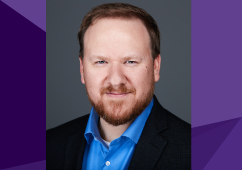
Please join us in the Electrical and Computer Engineering Department at the Technological Institute for a Distinguished Seminar with Dr. Dana Anderson. This event will take place in Cohen Commons.
After seminar there will be a reception with refreshements from 5:00 pm - 6:30 pm. We look forward to seeing you there!
Abstract: A driven matter-wave oscillator provides the starting point for this introduction to circuit design for atomic quantum sensors and signal-processing systems. Functionally analogous to a laser, and more directly to a microwave transistor oscillator, it brings together a source of power, an active gain element, and frequency-selective feedback. Atomic systems have established roles in applications such as timekeeping, inertial sensing, radio-frequency detection, and quantum computing. The motivation behind this talk is to develop engineering principles, design heuristics, and computational tools that allow systems designers to build on those capabilities. The aspiration is a design practice in which knowledge and components can be reused across applications, supporting increasingly sophisticated systems. To this end, I will introduce alternating currents of electrically neutral atoms and the associated AC matter waves that interact with a sensed environment and carry signals. AC waves have a classically measurable phase and an oscillation frequency independent of the constituent particle energy. Their propagation and interaction with potential structures lead naturally to a description in terms of impedance, providing analytical tools and physical intuition familiar from microwave circuit design.In the implementations considered here, optical potentials define the circuit structures through which the atomic signals propagate. Nonlinear interactions among atoms provide a route to transistor action: a small matter-wave current can modulate the impedance presented to a much larger one. An appropriately configured interaction provides phase-sensitive gain, amplifying one signal quadrature while attenuating the orthogonal quadrature, with a Bose–Einstein condensate supplying energy to the signal. Combining gain with feedback leads to the driven oscillator introduced at the outset. The oscillator thus serves both as a source of AC matter waves and as a worked example of circuit design. I will conclude with examples illustrating how the same concepts can be applied to sensing and signal processing, and how computational design tools connect physical parameters to device requirements.
Bio: Dr. Dana Z. Anderson is the founder and Chief Science Officer of Infleqtion, where he guides the company’s scientific vision and quantum technology strategy across quantum computing, sensing, and precision timing. Over more than four decades, Anderson has advanced scientific discovery and technology through contributions ranging from early work on the LIGO gravitational-wave project to breakthroughs in optical neural networks, ultracold-atom systems, quantum sensing, and precision measurement. His work has helped translate fundamental advances in atomic physics into technologies with practical and commercial applications.
TIME Tuesday, October 27, 2026 at 4:00 PM - 6:30 PM
LOCATION L482, Technological Institute map it
CONTACT Lee Onysko lee.onysko@northwestern.edu EMAIL
CALENDAR Department of Electrical and Computer Engineering (ECE)
-
Oct28
EVENT DETAILS
lessWednesday / CS Seminar
October 28 / 12:00 PM
Hybrid / Mudd 3514Speaker
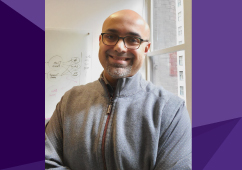
Aaron Shaw, Northwestern UniversityTalk Title
Beyond heuristics: A meta-scientific agenda for generative AI-powered social researchAbstract
Applications of LLMs and generative AI for the simulation of social and behavioral evidence are expanding rapidly. During these early days, norms and standards of evidence remain incoherent and grounded in heuristics inherited from earlier paradigms. This talk argues for a meta-scientific agenda to ground the use of LLMs for social research. Such an agenda should advance around three core principles: (1) validation; (2) transparency; and (3) observation. I illustrate each of these with examples from recent and ongoing work.Biography
Aaron Shaw is Professor of Communication Studies and Sociology (by courtesy) at
Northwestern University; Co-Founder of the Community Data Science Collective; faculty affiliate of the Northwestern Center for HCI+Design, the Institute for Policy Research, and the Buffett Institute for Global Affairs; as well as a Faculty Associate of the Berkman Klein Center for Internet & Society at Harvard University. He studies organizing, participation, and governance in online communities, especially ones that create public information resources and digital infrastructure. His most recent work includes projects on online community governance, LLM-based social science, AI impacts on digital public infrastructure, and a new book, Peer Production, published by MIT Press.Research Area/Interest: human-computer interaction, social science, social computing, human-centered AI
TIME Wednesday, October 28, 2026 at 12:00 PM - 1:00 PM
LOCATION 3514, Mudd Hall ( formerly Seeley G. Mudd Library) map it
CONTACT Wynante R Charles wynante.charles@northwestern.edu EMAIL
CALENDAR Department of Computer Science (CS)
-
Oct28
EVENT DETAILS
less
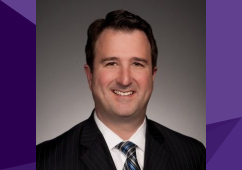
Please join us in the Electrical and Computer Engineering Department at the Technological Institute for a seminar with Jeff Shamma, PhD.
Student Introduction by Hessam Shahbazi 3:45 pm - 3:55 pm.
Abstract: The framework of multi-agent game-theoretic learning explores how individual agent strategies evolve in response to the strategies of others. A central question is whether these evolving strategies converge to classical solution concepts, such as Nash equilibrium. This talk adopts a control-theoretic perspective by recognizing that learning agents interacting with one another form a feedback system. Learning dynamics are modeled as open dynamical systems that map payoffs, regardless of their source, into strategy updates, while the game itself provides the feedback interconnection. The focus is on uncoupled learning, where agents update strategies based solely on observed payoffs, without explicit knowledge of utility functions (their own or of others). This perspective enables the use of control-theoretic tools to both analyze and synthesize learning dynamics. We first exploit that convergence to Nash equilibrium corresponds to feedback stability. The main part of the talk establishes that uncoupled learning can, in general, lead to mixed-strategy Nash equilibrium, while highlighting that the required learning dynamics are not universal and may sometimes involve seemingly irrational behavior. We go on to show how a control-theoretic perspective supports compositional analysis of learning in games using game-theoretic extensions of passivity theory.
Bio: Jeff Shamma is Department Head of Industrial and Enterprise Systems Engineering and Jerry S. Dobrovolny Chair at the University of Illinois Urbana-Champaign. He previously held faculty positions at the King Abdullah University of Science and Technology (KAUST) and at Georgia Tech as the Julian T. Hightower Chair in Systems and Controls. Jeff received a PhD in Systems Science and Engineering from MIT in 1988. He is a Fellow of IEEE and IFAC, a past Distinguished Lecturer of the IEEE Control Systems Society, and a recipient of the IFAC High Impact Paper Award, AACC Donald P. Eckman Award, and NSF Young Investigator Award. Jeff has been a plenary/semi-plenary speaker at NeurIPS, World Congress of the Game Theory Society, and IEEE Conference on Decision and Control. He was Editor-in-Chief of the IEEE Transactions on Control of Network Systems from 2020-2024. Jeff’s research focuses on decision and control, game theory, and multi-agent systems.
TIME Wednesday, October 28, 2026 at 3:45 PM - 5:45 PM
LOCATION L440, Technological Institute map it
CONTACT Lee Onysko lee.onysko@northwestern.edu EMAIL
CALENDAR Department of Electrical and Computer Engineering (ECE)
-
Oct29
EVENT DETAILS
lessJoin us for a fun Halloween-themed gathering where you can make festive crafts, decorate seasonal projects, and enjoy a relaxed social atmosphere. Whether you're a crafting enthusiast or just looking to connect with others, this event is a great way to celebrate the season and create something unique to take home. 🎃🍂✨
Snacks provided!
TIME Thursday, October 29, 2026 at 2:00 PM - 4:00 PM
LOCATION 3514, Mudd Hall ( formerly Seeley G. Mudd Library) map it
CONTACT Bella Barrios marbella.barrios@northwestern.edu EMAIL
CALENDAR Department of Computer Science (CS)
-
Nov2
EVENT DETAILS
lessWednesday / CS Seminar
November 2 / 12:00 PM
Hybrid / Mudd 3514Speaker
Farzaneh Derakhshan, Northwestern UniversityTalk Title
Quantitative Security Guarantees for Concurrent SystemsAbstract
Modern software is built from components that interact with each other: processes exchanging messages, threads sharing GPU memory, and AI agents coordinating with one another. Classical security guarantees for such systems are all-or-nothing: a program either leaks secret information or it does not. In practice, however, almost every system leaks some information, so the real question is how much.
In this talk, I will present a type-based (and logic-based) compositional approach to measuring information leakage in concurrent programs. The centerpiece is our recent work on session types, a type discipline that describes communication protocols of message-passing processes. I will show how well-typed probabilistic programs give rise to probability distributions over communication traces, and explain how these distributions let us measure how much an active attacker can gain by interacting with a system: observing the public communications and adapting her strategy based on the messages she receives from the program. I will then briefly discuss how similar ideas, via relational reasoning, can be adapted to GPU programs, where our relational Hoare logic bounds the difference in resource usage between executions with different secrets, quantifying resource usage as a side channel in CUDA kernels. I will close with future directions on extending these guarantees to systems that mix verified and tested components, including black boxes such as third-party services, whose internals we cannot verify but whose interactions we can observe.
Biography
Farzaneh Derakhshan is a Research Assistant Professor in the Department of Computer Science at Northwestern University. Her research is in programming languages, formal methods, and language-based security, with a focus on quantitative and compositional reasoning about concurrent systems. Before joining Northwestern, she was an Assistant Professor of Computer Science at Illinois Institute of Technology and a postdoctoral fellow at Carnegie Mellon University, where she also received her PhD in Pure and Applied Logic, advised by Frank Pfenning. Her work has appeared or is forthcoming at venues including POPL, LICS, OOPSLA, CSF, and ESOP, and is supported by the National Science Foundation.Research Area/Interest: programming languages, formal methods, language-based security
TIME Monday, November 2, 2026 at 12:00 PM - 1:00 PM
LOCATION 3514, Mudd Hall ( formerly Seeley G. Mudd Library) map it
CONTACT Wynante R Charles wynante.charles@northwestern.edu EMAIL
CALENDAR Department of Computer Science (CS)
-
Nov2
EVENT DETAILS
lessHigh-stakes applications, such as medicine and defense, increasingly rely on processing sensitive data held by multiple organizations. However, those organizations are often unwilling or unable to share their data due to privacy concerns and regulations, such as HIPAA and GDPR. For example, during COVID-19, the NIH needed statistics from hospitals to support public health analytics, but sharing patient records could expose personal information. Secure collaborative analytics (SCA) enables multiple mutually distrustful data providers to jointly answer SQL queries over the union of their private records without revealing them to anyone. Cryptographic techniques, such as zero-knowledge proofs (ZKPs) and secure multi-party computation (MPC), protect data privacy and verify the integrity of query answers in SCA, but applying them to query evaluation efficiently and at scale is not trivial.
My doctoral research builds database management systems with efficient, scalable, and trustworthy query evaluation for SCA. As my first project, ZKSQL lets a single data provider prove to a client with ZKPs that its query answers are correct and complete with respect to its committed private records. It verifies sorts and joins efficiently with multisets. Next, RESCU-SQL lets mutually distrustful computing parties work together to evaluate queries under MPC, ensuring malicious security against a dishonest majority, aided by a lightweight trusted coordinator to make the execution more efficient. To scale SCA to more data and providers, CASTLE marries these two approaches into a single workflow. First, each provider concurrently evaluates operations over its private records locally and proves the intermediate results to others with ZKPs. CASTLE then runs an authenticated bridge protocol to convert these results into certified inputs for joint evaluation under MPC. It realizes the local and joint phases with ZKSQL and RESCU-SQL. This framework guarantees end-to-end integrity from the committed source records to the final query answer.TIME Monday, November 2, 2026 at 1:00 PM - 3:00 PM
LOCATION 3501, Mudd Hall ( formerly Seeley G. Mudd Library) map it
CONTACT Jensen Smith jensen.smith@northwestern.edu EMAIL
CALENDAR Department of Computer Science (CS)
-
Nov3
EVENT DETAILS
lessResearch in the natural sciences increasingly depends on computational simulations,
high-resolution imaging, and complex software. However, expensive calculations,
labor-intensive image interpretation, and inadequate software documentation can limit the pace
and accessibility of research. This dissertation investigates how machine learning can address
these bottlenecks through three complementary directions: predicting scientific quantities
efficiently, explaining model behavior, and automating supporting computational tasks. Materials
science provides the principal application domain, complemented by a general-purpose tool for
software documentation.
For efficient prediction of material behavior, we develop supervised learning models that
reconstruct bilinear approximations of orientation-dependent stress–strain curves from features
obtained after a single crystal plasticity finite element simulation step. Using datasets of 100
complete curves per material, the framework achieves mean absolute relative errors of 1.43\%
for aluminum, 1.53\% for nickel, and 2.86\% for copper, with an estimated speedup of
approximately 4,000-fold for nickel. We then address structural characterization by learning
lattice parameters directly from simulated scanning transmission electron microscopy images of
two-dimensional materials. Evaluated on JARVIS-2D, the Computational 2D Materials Database
(C2DB), and an Alexandria-derived dataset, DenseNet121 predicts lattice lengths and angles,
achieving mean absolute errors of 0.17 Å and 0.19 Å for the two in-plane lattice constants on
the full C2DB test set. A separate classification model achieves 96\% Bravais lattice
classification accuracy on the Alexandria-derived dataset.
Extending image-based prediction to multimodal generation, we benchmark Llama~3, Qwen~2,
and Gemma~3 vision-language models adapted using quantized low-rank fine-tuning to
generate structural descriptions from microscopy images and chemical-composition prompts.
On the subset of C2DB test samples with correctly predicted stoichiometry,
Llama 3 achieves mean absolute errors of \(0.32\,\text{\AA}\),
\(0.39\,\text{\AA}\), and
γ
4. 19◦ 𝑎 𝑏
for , , and
, respectively. Distributional analyses and preliminary experimental-image tests further
characterize the models' capabilities and limitations.
To investigate the evidence underlying image-based decisions, we introduce XNano, an
explainability study comparing raw-image and preprocessed nanoparticle classifiers on 3,590
test images. Attribution maps and region-level integrated-gradient analyses suggest that
preprocessing changes the representation used for classification, including particle and
boundary features. The preprocessed model achieves higher accuracy despite weaker
particle-to-background attribution-density contrast, while some previously correct predictions
become errors. These findings motivate evaluating model behavior alongside aggregate
predictive performance.
Finally, ReadmeReady combines retrieval-augmented generation, configurable language
models, and optional parameter-efficient fine-tuning to produce repository documentation from
source code. Experiments demonstrate its utility for generating initial documentation while
showing that resource-constrained fine-tuning does not consistently improve quality. Together,
these contributions illustrate how machine learning can accelerate materials modeling and
characterization, support scrutiny of automated decisions, and assist the software workflows on
which computational research depends.TIME Tuesday, November 3, 2026 at 10:00 AM - 12:00 PM
LOCATION L440 - ECE Conference Room, Technological Institute map it
CONTACT Jensen Smith jensen.smith@northwestern.edu EMAIL
CALENDAR Department of Computer Science (CS)
-
Nov4
EVENT DETAILS
lessWednesday / CS Seminar
November 4 / 12:00 PM
Hybrid / Mudd 3514Speaker
Haoqi Zhang, Northwestern UniversityTalk Title
Computational Ecosystems: Advancing Human Values Through Integrative Computing and Changing PracticeAbstract
Despite decades of computing advances, some human problems and core human values have remained difficult to solve or promote at scale. Instead of advancing individual technologies, I focus our attention on making major leaps in system-level thinking and orchestration. Specifically, I describe my efforts to design, build, and study computational ecosystems that interweave effective practices, interactional structures, and intelligent systems to form new, integrative solutions. Computational ecosystems emphasize (1) combining wedges of human and machine intelligence to make effective practices feasible; and (2) creating processes, interactions, and communities that sustain and deepen practice.
In the first half of my talk, I will share examples of computational ecosystems we built over the last decade that transform how we plan, coordinate, learn, connect, and innovate. The second half of my talk will share our more recent efforts to support human practices and human experiences computationally. I will close with a few thoughts on why we need computational ecosystems, especially if we intend to not only meet our consequentialist aims but to deepen our engagement in intrinsically valuable human activities.
Biography
Haoqi Zhang is an associate professor in Computer Science and Design at Northwestern University, where he also holds a courtesy appointment in Learning Sciences. His work advances the design of integrated socio-technical models that solve complex problems and advance human values. His research work bridges across Computer Science, Design, Learning Science, Psychology, and Philosophy, and is generously supported by the National Science Foundation.
Haoqi received his PhD in Computer Science and BA in Computer Science and Economics from Harvard University. At Northwestern he founded and directs the Design, Technology, and Research (DTR) program, which provides an original model for learning and growing through research for over 180 students (read the DTR annual letters, available at dtr.northwestern.edu/letters; and watch the DTR documentary, Forward, at http://forward.movie). With Matt Easterday, Liz Gerber, and Nell O’Rourke, Haoqi co-directs the Delta Lab, an interdisciplinary research lab and design studio across computer science, learning sciences, and design.
TIME Wednesday, November 4, 2026 at 12:00 PM - 1:00 PM
LOCATION 3514, Mudd Hall ( formerly Seeley G. Mudd Library) map it
CONTACT Wynante R Charles wynante.charles@northwestern.edu EMAIL
CALENDAR Department of Computer Science (CS)
-
Nov9
EVENT DETAILS
lessMonday / CS Seminar
November 9 / 12:00 PM
Hybrid / Mudd 3514Speaker
Mohit Bansal, UNC Chapel HillTalk Title
AI Challenges: Trustworthy Collaboration, World Discovery, and Long-Horizon MemoryAbstract
In this talk, I will discuss 3 major pitfalls and challenges of current state-of-the-art AI agents, and present potential solutions for: (1) Teaching agents to be trustworthy and reliable collaborators based on: social/pragmatic multi-agent interactions via speaker-listener confidence calibration, learning to balance positive and negative persuasion, and multi-agent AI safety through the lens of compositional attacks, theory-of-mind, and belief-steering; (2) Discovering and improving skills/world models needed for efficient, robust action and collaboration based on: discovering reusable programmatic skills (including for multi-agent setups), weakness-driven adaptive data/environment generation for skill improvement, and structured world model discovery and inference; (3) Planning of long-horizon memory for multi-step reasoning and generation over continuously evolving, conflicting, and scattered information. We will cover diverse domains (math, commonsense, coding, tool-use, computer use, embodied actions, etc.), modalities (text, images, videos, audio, gaze, layouts, etc.), and real-world applications (early medical diagnosis and classroom education engagement).Biography
Dr. Mohit Bansal is the John R. & Louise S. Parker Distinguished Professor, Director of the MURGe-Lab (UNC-AI Group), and Core AI Lead of the ENGAGE NSF-AI Institute in the Computer Science department at UNC Chapel Hill. He received his PhD from UC Berkeley and his BTech from IIT Kanpur. His research expertise is in multimodal generative models, reasoning and planning agents, faithful language generation, and interpretable, efficient, and generalizable deep learning. He is an ACL and AAAI Fellow and recipient of the Presidential Early Career Award for Scientists and Engineers (PECASE), IIT Kanpur Young Alumnus Award, DARPA Director's Fellowship, NSF CAREER Award, Google Focused Research Award, Microsoft Investigator Fellowship, Army Young Investigator Award (YIP), DARPA Young Faculty Award (YFA), and outstanding paper awards at ACL, CVPR, EACL, COLING, CoNLL, and TMLR. He has been a keynote speaker for the IEEE/CVF WACV 2027, IEEE MLSP 2026, ECAI 2025, ACM-CODS 2025, AACL-IJCNLP 2023, CoNLL 2023, and INLG 2022 conferences. His service includes EMNLP Program Co-Chair, Associate Editor-in-Chief for TPAMI, CoNLL Program Co-Chair, ACL Executive Committee, ACM Doctoral Dissertation Award Committee, ACL Doctoral Dissertation Award Co-Organizer, ACL Mentorship Program Co-Founder, and Associate Editor for ACM AI Letters, TACL, CL, IEEE/ACM TASLP, and CSL journals. Webpage: https://www.cs.unc.edu/~mbansal/Research Interest/Area: AI, NLP, CV, ML
TIME Monday, November 9, 2026 at 12:00 PM - 1:00 PM
LOCATION 3514, Mudd Hall ( formerly Seeley G. Mudd Library) map it
CONTACT Wynante R Charles wynante.charles@northwestern.edu EMAIL
CALENDAR Department of Computer Science (CS)
-
Nov19
EVENT DETAILS
lesstba
TIME Thursday, November 19, 2026 at 9:00 AM - 11:00 AM
LOCATION 3514, Mudd Hall ( formerly Seeley G. Mudd Library) map it
CONTACT Wynante R Charles wynante.charles@northwestern.edu EMAIL
CALENDAR Department of Computer Science (CS)
-
Dec4
EVENT DETAILS
lessTBA
TIME Friday, December 4, 2026 at 12:00 PM - 2:00 PM
CONTACT Wynante R Charles wynante.charles@northwestern.edu EMAIL
CALENDAR Department of Computer Science (CS)
-
Dec9
EVENT DETAILS
lessInformation systems have become the cornerstone of how decisions are made in nearly every domain of human activity, constituting the infrastructure through which knowledge is accessed and acted upon. At their core, an information system is any integrated combination of hardware, software, databases, networks, and human expertise organized to collect, process, store, and analyze information in support of operations and decision-making. The usability of such systems in practice is governed by two properties that have historically stood in tension: accuracy and fluency. Symbolic, query-based systems offer high accuracy but require specialized query languages or code to interact with effectively, while large language model (LLM)-based systems are fluent and accessible through natural language but remain prone to hallucination and factual error. The goal of this dissertation is twofold: to build information systems that answer questions and generate reports from data both accurately and fluently, and to generate training data that improves the accuracy and fluency of such systems, in both cases by using structured knowledge and rules as a source of ground truth for language generation.
To this end, this dissertation introduces a neurosymbolic framework, grounded in knowledge representations of data and analytics, that first produces language outputs that are accurate but not necessarily fluent, and then uses these outputs to condition LLM generation, yielding final outputs that are both accurate and fluent. These outputs can serve two roles: as the final product delivered to a user, or as training data for the models that later serve users. This framework is first demonstrated through Satyrn, a report generation system in which domain-independent report blueprints produce accurate but coarse information that is then used to condition LLMs, jointly producing reports that are more factual, fluent, and coherent than those generated by existing neural methods. The framework is then applied to training data generation through RingSQL, a platform that combines these knowledge representations with LLM-based paraphrasing to produce text-to-SQL training data that is as diverse and fluent as LLM-generated data while remaining more accurate and faithful to the underlying query. Data generated with RingSQL provides a stronger training signal than data produced with prior LLM-based methods, template-based methods, and even human-annotated data. Finally, this dissertation introduces methods for grounding the generation of reasoning traces in verifiable, rule-based evaluation, and uses these traces in a mixed-policy reinforcement learning setting, offering an additional path toward improving the accuracy of LLM-based information systems. Together, these contributions demonstrate that structured knowledge and language are complementary, and that unifying them can reconcile the accuracy-fluency trade-off in information systems.TIME Wednesday, December 9, 2026 at 6:00 PM - 8:00 PM
CONTACT Jensen Smith jensen.smith@northwestern.edu EMAIL
CALENDAR Department of Computer Science (CS)