

Student ProjectsActive Slide Board - Medical Makers
 Project Manager
Nathaniel Rogers, Medical Makers
Amount Requested
$3,550
Summary
The US medical device industry is projected to reach a value of approximately $200 billion in 2025 [Source: fortunebusinessinsights.com], yet Northwestern offers limited hands-on medical device experience for students. Medical Makers addresses this gap by developing real-world solutions for healthcare partners while providing students with industry-relevant skills typically unavailable in traditional coursework.
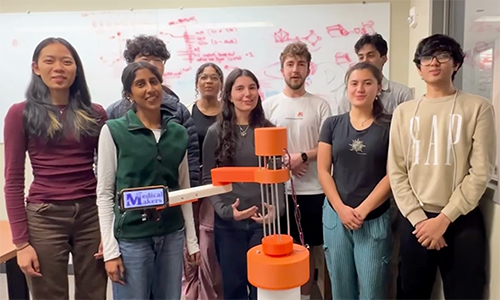
This year, we're advancing our Active Slide Board project — an electromechanical device that enables patients with mobility challenges to transfer between a wheelchair and bed with minimal caregiver assistance. A traditional slide board is a passive device that require significant physical effort from healthcare professionals to operate properly. (video attached in “Link to Video” section). Developed in partnership with the Shirley Ryan AbilityLab, our innovative Active Slide Board will enhance patient autonomy, reduce physical strain on healthcare workers, and adapt to individual patient needs. The idea for the project was sourced directly from a nurse at the Shirley Ryan Abilitylab, ensuring both novelty and clinical relevance.
Through the Active Slide Board project, students gain invaluable experience through design reviews with Stryker representatives, CAD modeling, circuit design, and direct patient interaction — skills that translate directly to medical device careers. Our barrier-free club structure connects students across majors and schools, fostering interdisciplinary collaboration essential in healthcare technology.
The project delivers dual impact: patients receive a device that improves their quality of life and independence, while students acquire industry-relevant experience unmatched in Northwestern's traditional curriculum.
Watch video about how patients are transferred using a slide board.
Planned Activities/Investments
Medical Makers will implement a comprehensive program structure to maximize both learning and project outcomes. We'll host general meetings during the first weeks of fall and winter quarters to attract new members, followed by weekly Slide Board team meetings that will increase to twice weekly (or more) as the project advances.
Our activities include:
- Hands-on workshops covering technical skills, including CAD, circuit design, and soldering
- Device tear-down events, where students disassemble and analyze medical devices to understand the engineering principles behind existing healthcare technology
- Design research visits to Shirley Ryan AbilityLab to interview patients and healthcare providers and understand the constraints of the clinical environment
- Rapid prototyping sessions using established activities like 3D Pictionary and randomized design challenges that foster creative problem-solving
Murphy Society funding will directly support materials for these educational activities and ease the financial burden of research trips to our healthcare partners. This investment enables more frequent and comprehensive design research, including patient shadowing and stakeholder interviews that are crucial for developing user-centered medical devices.
Our proven meeting structure has already yielded success, including 4th place at the RESNA competition and an Honorable Mention with $500 prize at the Tikkun Olam Makers Global Innovation Challenge.
Impact
Primary Impact: Patients with Mobility Challenges
Our Active Slide Board will directly transform the hospital experience for patients with mobility limitations. This device represents a tangible improvement to patient autonomy and quality of life — an impact only possible through Medical Makers' unique position as a student organization with direct healthcare partnerships. Unlike theoretical classroom projects, our work creates real solutions for real people facing daily mobility challenges.
We will evaluate patient impact through direct user testing in clinical environments, measuring improvements in autonomy, comfort during transfers, and overall satisfaction with the bed entry/exit process. Patient feedback surveys will capture both quantitative metrics and qualitative experiences.
Secondary Impact: Healthcare Professionals
Healthcare workers will benefit from reduced physical strain and improved efficiency during patient transfers. We'll survey these professionals about device usability, setup requirements, and integration with existing workflows.
Educational Impact: Student Development
Students gain real-world experience through direct patient and clinician interaction, industry mentorship from Stryker, and hands-on medical device development. Members develop technical skills (CAD, circuit design, prototyping), professional skills (design reviews and presentations), and meaningful connections across academic disciplines. This comprehensive experience — from initial patient interviews through final prototype testing — provides students with industry-relevant portfolios that distinguish them in competitive medical device careers.
Student impact will be assessed through feedback forms submitted to the Medical Makers Executive Board, tracking skill development and career preparation outcomes.
Deliverables
Primary Deliverable:
- One or more functional Active Slide Board prototypes ready for clinical testing
Documentation Package:
- Comprehensive CAD renderings and 3D engineering drawings
- Detailed design rationale documentation
- Clear instructions for use and setup
- Basic failure mode analysis and safety considerations
Assessment Tools:
- Patient experience feedback survey
- Healthcare professional usability survey
Competition Portfolio:
- Design competition-ready submission including technical documentation, design process narrative, and potentially a demonstration video
Sustainability
As a student group, Medical Makers prioritizes research and design projects that are achievable in a timeframe of two academic years. This Murphy Society award will support the second year of development of the Active Slide Board project. Ongoing support beyond 2025–2026 is not necessary because we will begin a new project in fall quarter 2026.
Budget Overview
- $500 - Design Activity Materials
We will use this part of the budget to purchase materials for design activities, both as parts of our Slide Board team meetings and as open events meant to teach skills to non-member students and attract new members to our project teams. - $750 - Workshops
This funding will be allocated to purchasing materials for medical device teardown events and workshops for skills like soldering, breadboarding, and rapid prototyping. - $2000 - Active Slide Board Materials
The most significant part of the budget will be devoted to building the Active Slide Board itself, which will likely necessitate several iterations using high-powered electric motors for safe, controllable patient movement. We will also need to construct a sturdy frame that can easily sustain a patient’s full bodyweight. - $300 - Travel Expenses
This part of the budget will fund student transit to Shirley Ryan AbilityLab to conduct design research (including interviews, shadowing, and other shared experiences) and testing. Note that free-for-students transportation methods (namely, the Intercampus Shuttle) are insufficient due to the need to bring project equipment and materials.
Total Budget Amount: $3,550
Matching Funds
We do not currently have commitments for matching funds. However, we receive significant support through our partnerships with Shirley Ryan AbilityLab (clinical expertise and testing facilities) and Stryker (industry mentorship and design review feedback), which adds substantial value to the project beyond direct financial contributions.
Faculty Adviser/Department
David O'Neill/Biomedical Engineering